
Enabling 100 years of flood resilience and climate adaptation for the UK’s longest river
Severn 2100 Adaptation Pathways Pilot
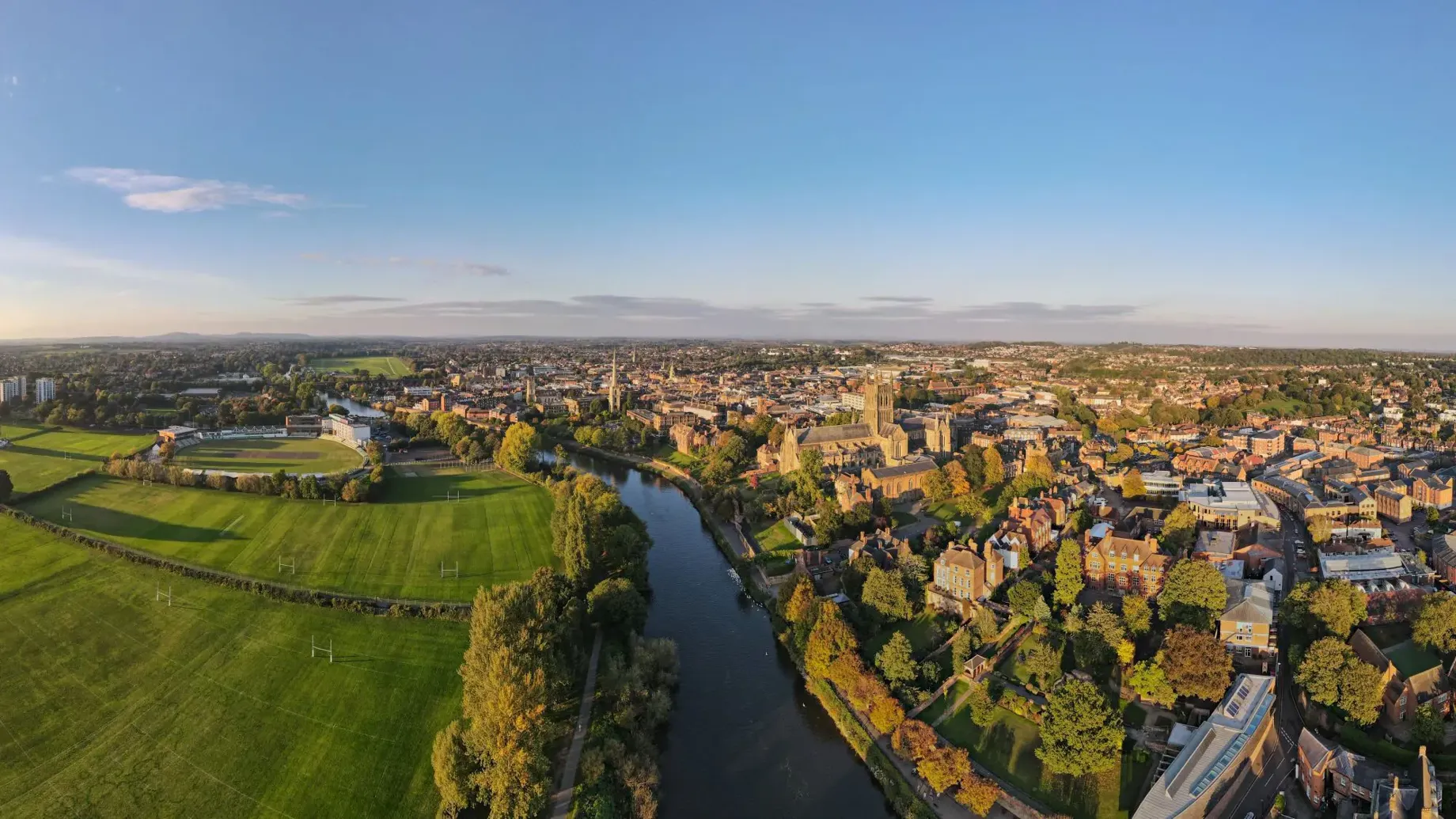
The River Severn (Afon Hafren) catchment is home to over five million people. It is vital to national water resources and food security, generating £7 billion annually through food production.
With the region facing increasing threats from fluvial flooding, a new strategic approach was urgently needed to enable effective regional flood resilience and climate adaptation, with collaboration across multiple organisations.
We worked in partnership with the Environment Agency and the River Severn Partnership (an award-winning group of 20+ regional stakeholders) to pioneer one of the first adaptation pathways approaches to manage fluvial flood risk in the UK.
Adaptation pathways enable decision-makers to take action under uncertainty. They provide a roadmap that is agile to the latest climate science, growth projections, investment opportunities and other changes to the local environment. This approach enables local places to better plan for future flooding and adapt to future climate hazards.
Severn 2100 marks a shift away from traditional flood risk management approaches, where fragmented, stand‑alone investments can increase the risk of schemes stalling or failing due to funding pressures. Instead, it uses catchment‑wide adaptation pathways that improve efficiency by directing targeted and coordinated action around a prioritised series of capital delivery opportunities.
The project supports the Severn region to successfully and collaboratively manage flood risk over the next 100 years, while delivering wider sustainable outcomes for a region of over five million people.
Adaptation pathways – a regional, catchment-based approach
Our framework included six key steps built around: context and ambition, risks and opportunities, adaptation actions, adaptation pathways, monitoring and evaluation, and planning for implementation.
Building on national and international good practice, each step of the process was co‑developed and tested in quarterly workshops with the River Severn Partnership (RSP), creating a robust, place‑based framework for adaptive planning.
Close collaboration with the RSP throughout delivery ensured vital local buy‑in. It strengthened regional capacity for climate adaptation – better equipping practitioners and policymakers to make timely, effective decisions for the benefit of the River Severn’s people, environment and economy.
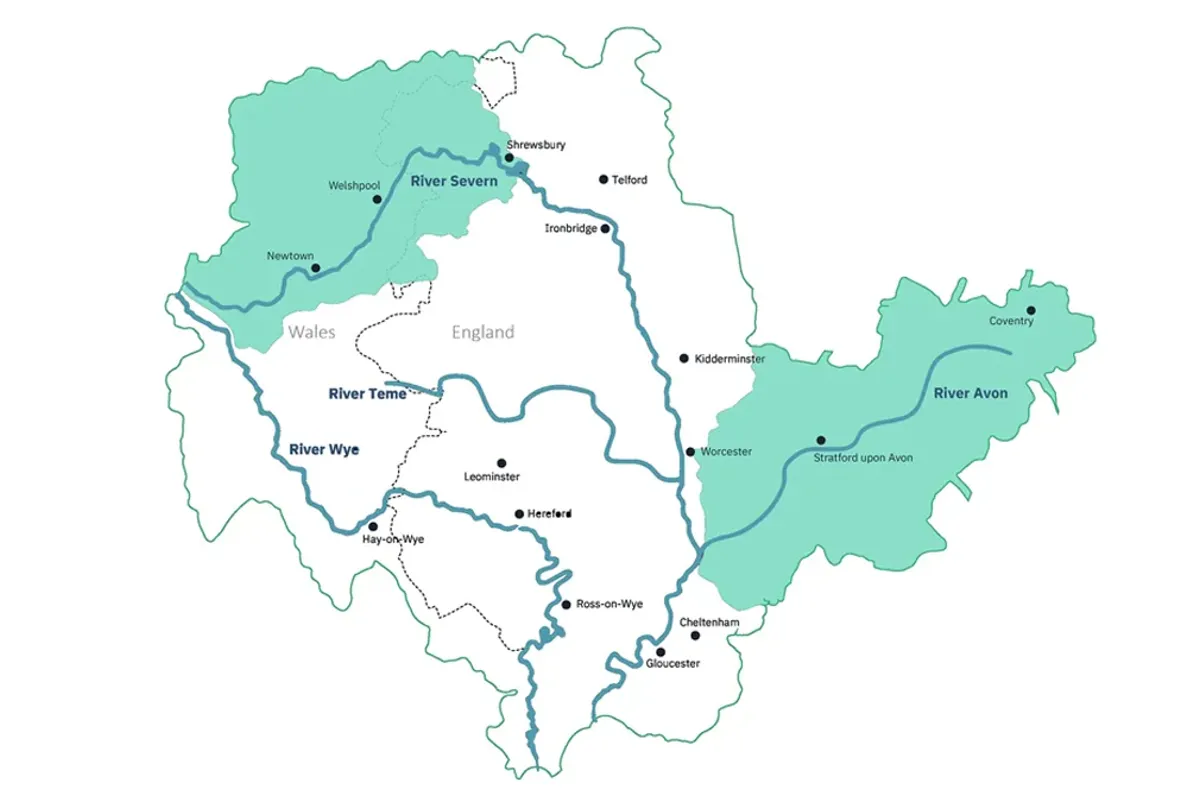
Adaption pathways have been tested and developed for two focus areas: the Upper Severn and the Warwickshire Avon.
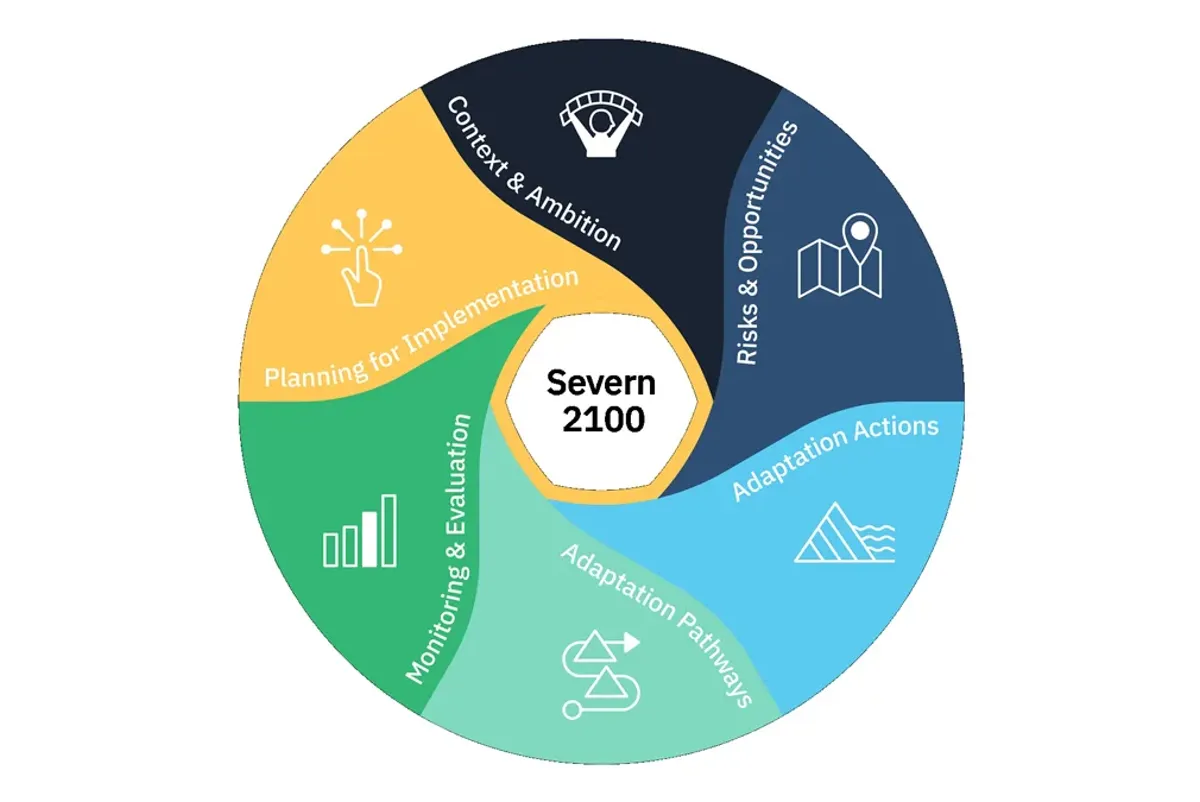
Our approach to developing adaptation pathways based on the British Standard for Adaptation to Climate Change.
We used an agile, iterative sprint approach – breaking the project into smaller sets of tasks to be completed in a short timeframe. This allowed us to simplify complex problems and make rapid progress towards project objectives.
Our ‘one-team’ approach across the Environment Agency and Arup (with support from Jacobs and Wilson Sherriff) used co-location days to strengthen team relationships and develop approaches and outputs together. Building mutual trust, combined knowledge and collective capacity for adaptation, enabled us to embrace uncertainty, test novel ideas and make project decisions that maintained pace of delivery.
A multi-capitals benefits toolkit
To support strategic decision-making, we developed a benefits toolkit to assess the total value of flood adaptation actions. It uses a six-capitals framework to consider not just financial impacts, but also social and environmental value.
The toolkit supports rapid decision-making, prioritising actions that maximise wider benefits across water resources, water quality, biodiversity and social value by placing higher weightings in certain areas to ensure that vulnerable populations are prioritised for action. It also unlocks opportunities for partnership funding by referencing themes from the RSP’s regional vision.
Ultimately, the toolkit strengthens the case for investment and supports a catchment-based approach by ensuring that local actions are aligned with regional outcomes.
The Severn Pilot is leading the way. The insights, tools, and guidance developed will better equip the Environment Agency and risk management authorities to embed adaptive approaches nationally across FCERM activities.
Piloting our adaptation pathways approach
We successfully piloted our approach for two areas of the Severn catchment – the Upper Severn and Warwickshire Avon. The resulting adaptation pathways present a flexible, long-term plan for managing flood risk, which helps us to plan how, and monitor when, to act under different futures.
Adaptation planning is iterative by nature. Our work presents the first iteration of adaptation pathways for two areas of the catchment. We recommend that next steps refine these pathways and apply our approach across the wider catchment to inform a regional approach for flood resilience and adaptation.
The insights generated from our pilot may also support adaptation efforts by others. By trialling our proof of concept approach nationally across different scales, systems, and contexts, it can be further developed to enable widespread adaptation.
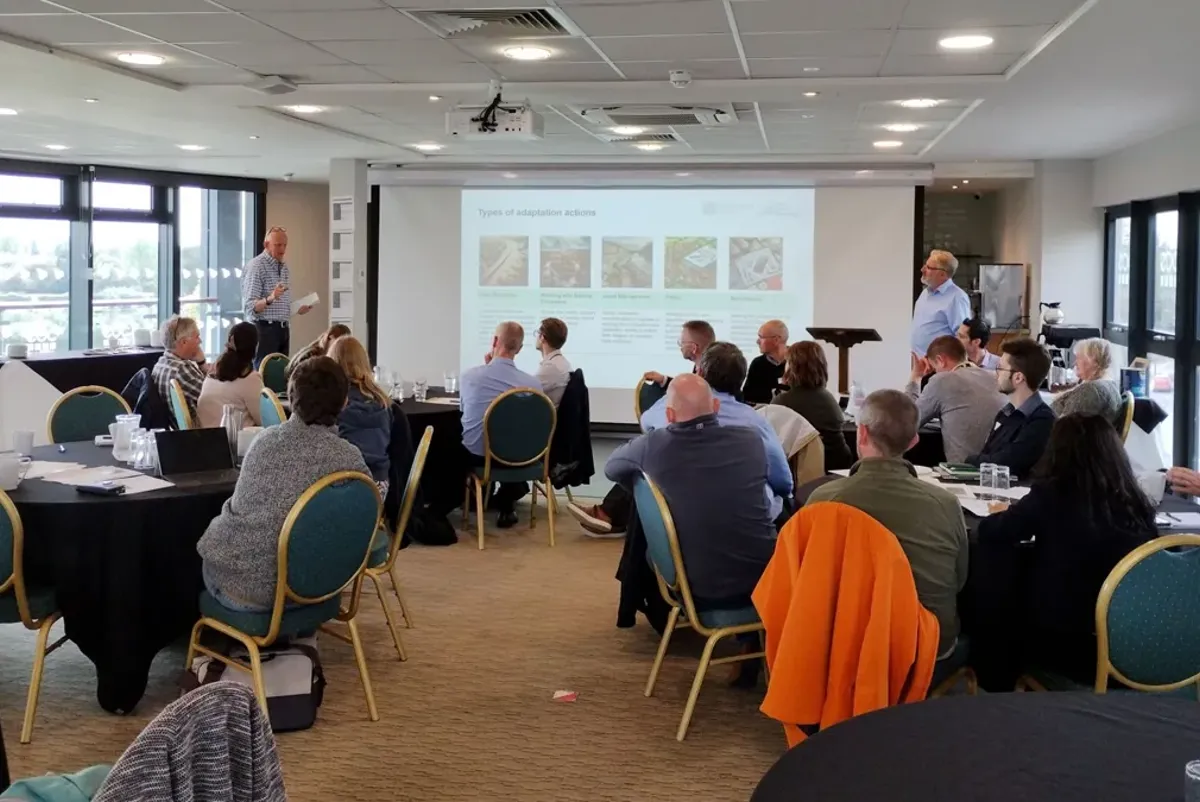
Quarterly workshops with the River Severn Partnership helped ensure local commitment to the plan.
Pathways informing local delivery opportunities
We have taken the pathways one step further – transforming our long‑term adaptation vision into practical opportunities for deliverable interventions for the Warwickshire Avon. Using the Severn 2100 process, we tested the identification of low‑regret, long‑term actions at catchment and sub‑catchment scale, building a clear understanding of when and where local measures are needed to secure long‑term resilience.
Our novel approach has demonstrated how adaptation pathways can identify opportunities for flood resilience actions – turning strategic climate adaptation planning into targeted, investable activity. This includes on-the-ground projects – such as upstream storage, natural flood management, and asset management schemes – alongside enabling actions spanning policy, behaviour and governance.
The Severn 2100 project has been funded by Defra as part of the £200 million Flood and Coastal Innovation Programme which is managed by the Environment Agency. The programmes will drive innovation in flood and coastal resilience and adaptation to a changing climate.
Taking a collaborative and catchment-scale approach for the River Severn will help the Environment Agency and partners drive efficiencies by enabling targeted action around prioritised and sequenced delivery opportunities and accelerate the development of business cases for capital schemes.
River Severn Partnership / Jacobs / Wilson Sherriff
Projects
Explore more water projects

Geospatial analysis and visualization to support community-led, cross-border environmental interventions
Tijuana River Index, Mexico, USA

Improving water security and sanitation for millions in urban India
Australia-India Water Security Initiative (AIWASI), India

Creating cool and green streets with spatial data
Strategic Prioritisation Map for Water Sensitive Urban Design, Australia

Promoting climate resilient flood defence and development through nature-based solutions
Lower Darent Riverside Strategy, United Kingdom
Get in touch with us
If you'd like to speak to one of our water experts about any of the issues raised on this page or a potential collaboration then please get in touch by completing the form.
