
Engineering resilience and beauty into the world’s largest glass tube sculpture
The Mangrove
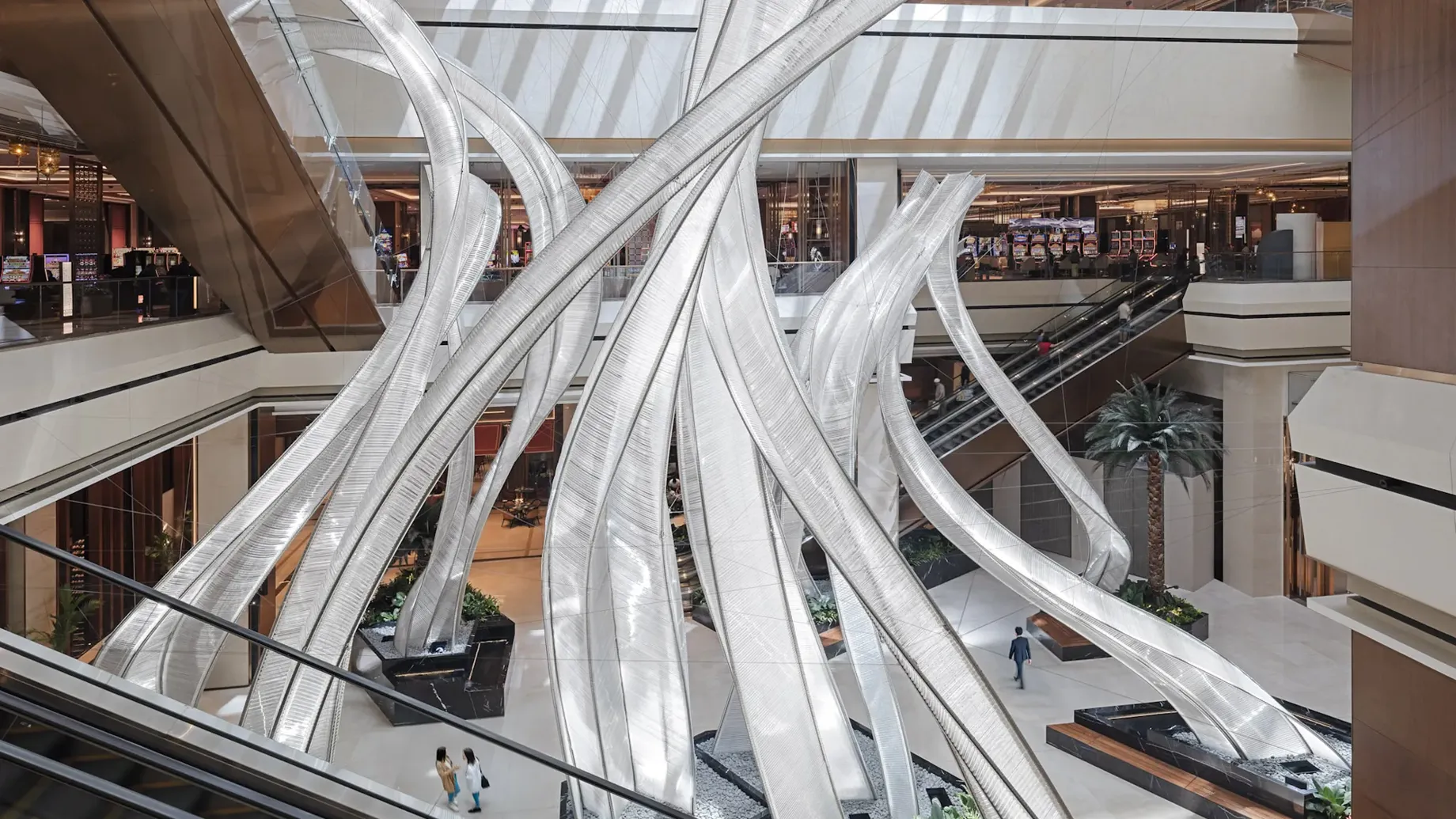
Solaire Resort North, Manila, commissioned a glass sculpture for the centrepiece of their building’s public-facing atrium, reflecting its ‘urban oasis’ theme. They wanted a visually striking, nature-inspired installation that encouraged movement and could withstand the country’s seismic conditions.
Arup collaborated with artist Nikolas Weinstein to engineer a flexible glass matrix using advanced simulation tools. We provided engineering advice, developed a lightweight structural system of steel tubes, cables and glass and refined the design through iterative modelling and physical testing. At 28 metres long, 35 metres wide and 27 metres high, it is the world’s largest glass tube sculpture.
The structure, inspired by the intricate roots of native mangrove trees, combines art and engineering to create a dynamic visitor experience. The project demonstrates how multidisciplinary collaboration can deliver sustainable, resilient and emotionally resonant design in seismic areas.
The world’s largest glass tube sculpture
Collaborating with Nikolas Weinstein Studios, Arup supported the transformation of artistic vision into structurally sound reality. The project was unique, pushing the boundaries of what had been previously achieved in glass sculpture, meaning there were no direct precedents or code recommendations to follow. This required the team to adopt innovative approaches to design, analysis and testing to meet the challenges from first principles.
Working at such a large architectural scale required developing a continuous and flexible glass matrix that functioned like a textile. The innovation, unlike traditional methods that assemble smaller elements, enabled the creation of cohesive, large‑scale systems. The sculpture reflects this approach by mimicking intricate, stilt‑like roots that rise through the atrium, shifting with light and embodying inherent strength within a human‑made space.
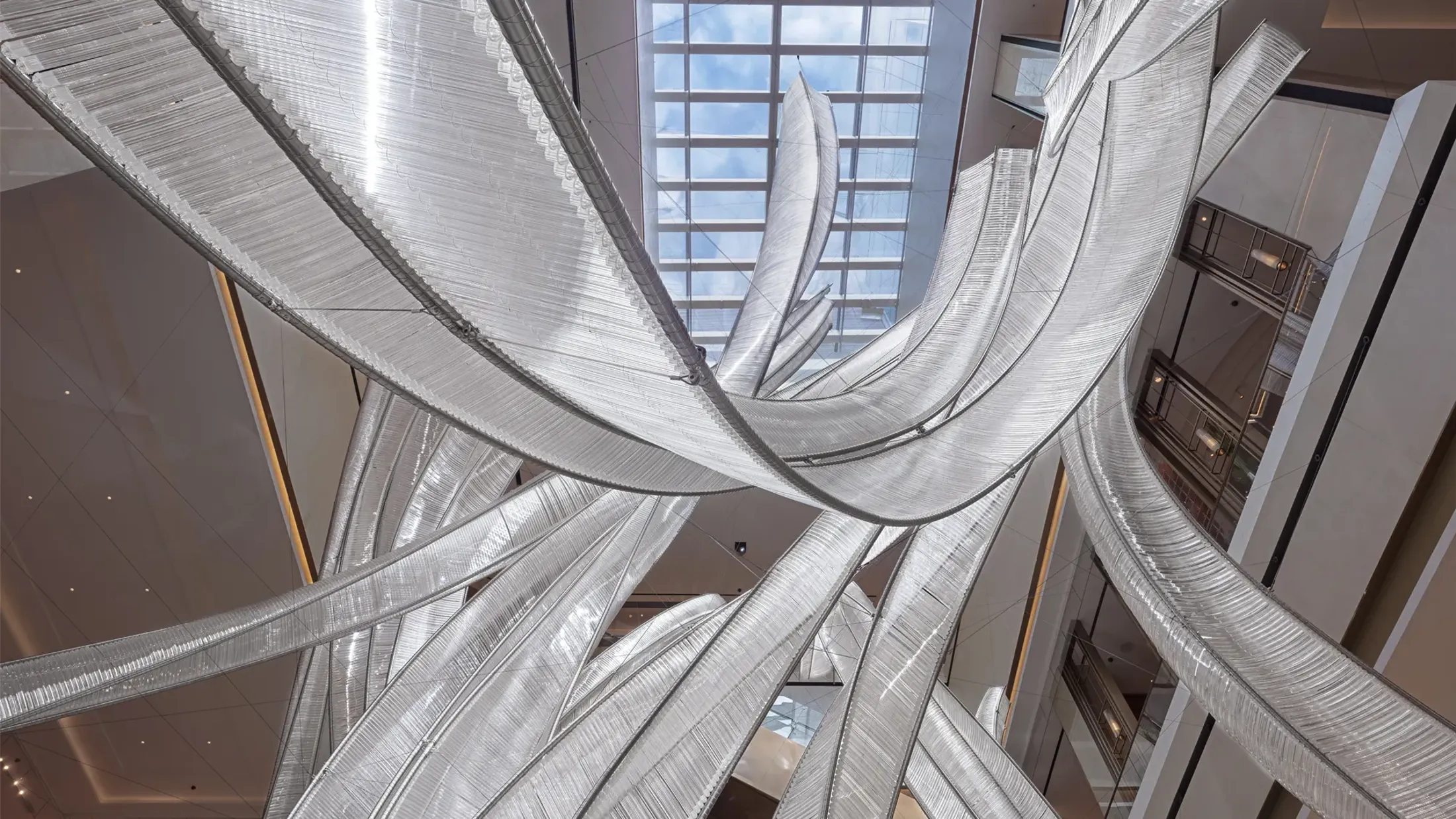
The Mangrove was designed with disassembly and reuse in mind. No bonding agents were used, allowing components to be separated at end-of-life. Image credit: Nikolas Weinstein Studios
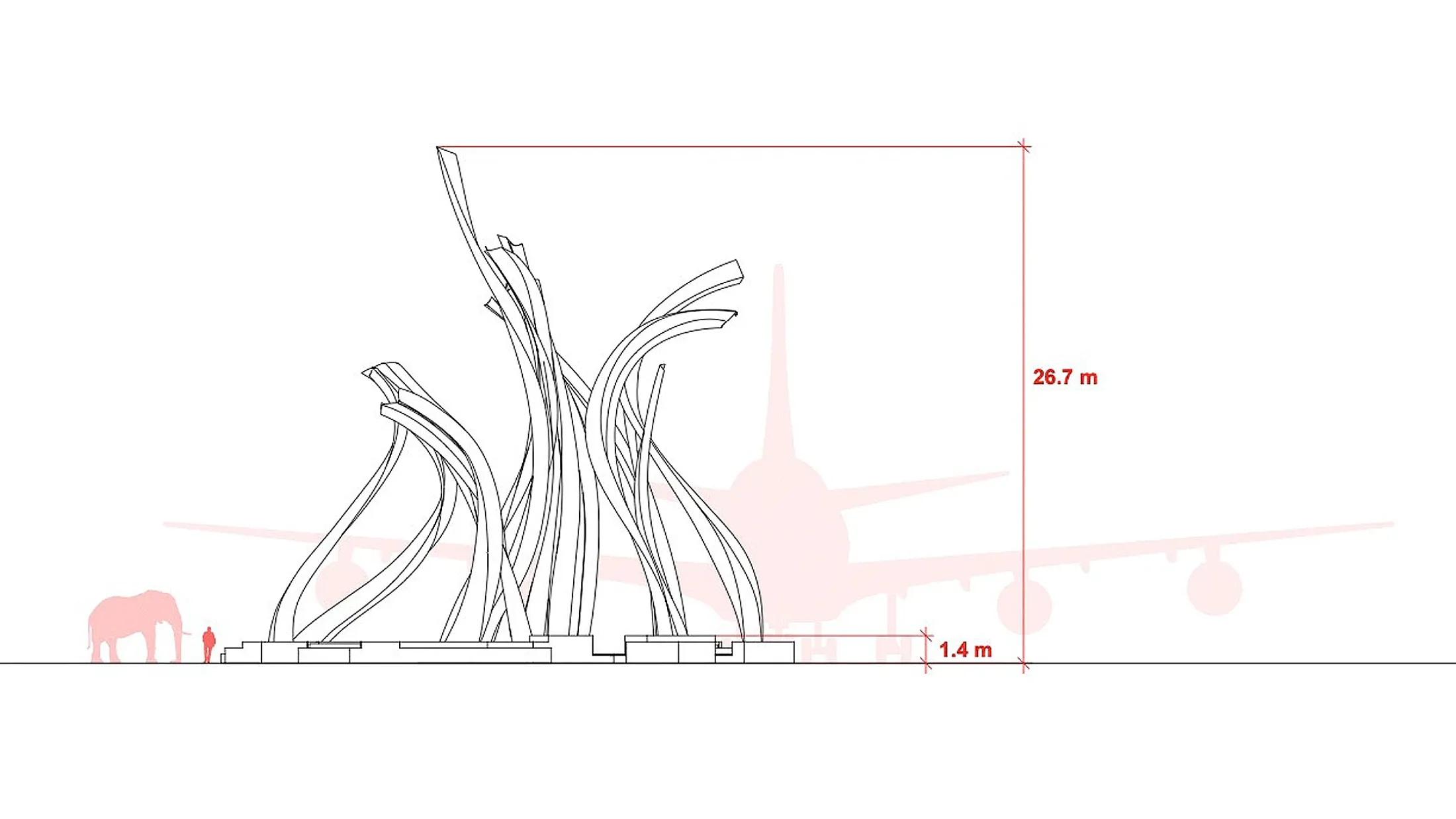
At 28 metres long, 35 metres wide and 27 metres high, it is the world’s largest glass sculpture. Image credit: Nikolas Weinstein Studios
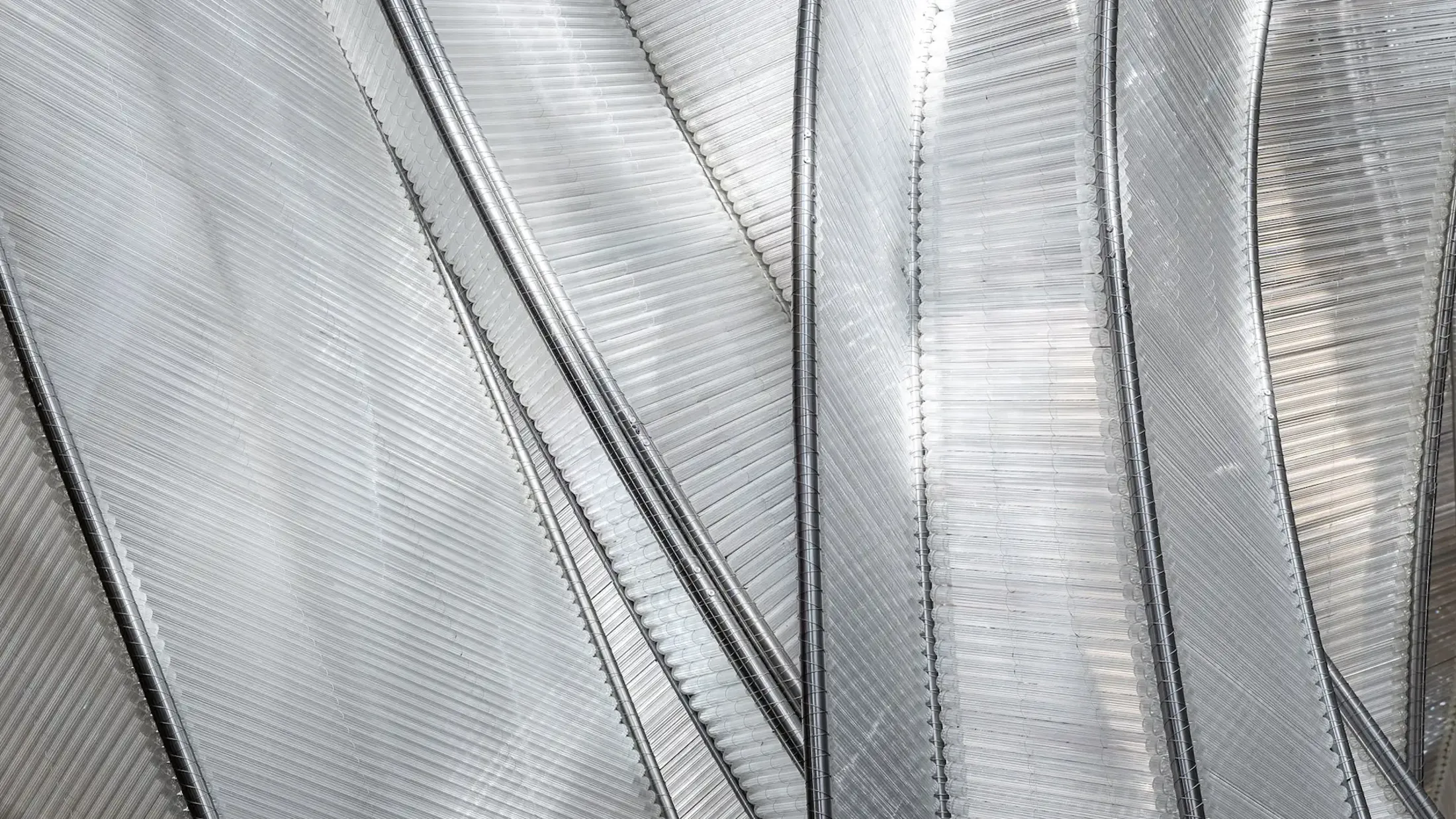
Working at such a large architectural scale required developing a continuous and flexible glass matrix that functioned like a textile. Image credit: Nikolas Weinstein Studios
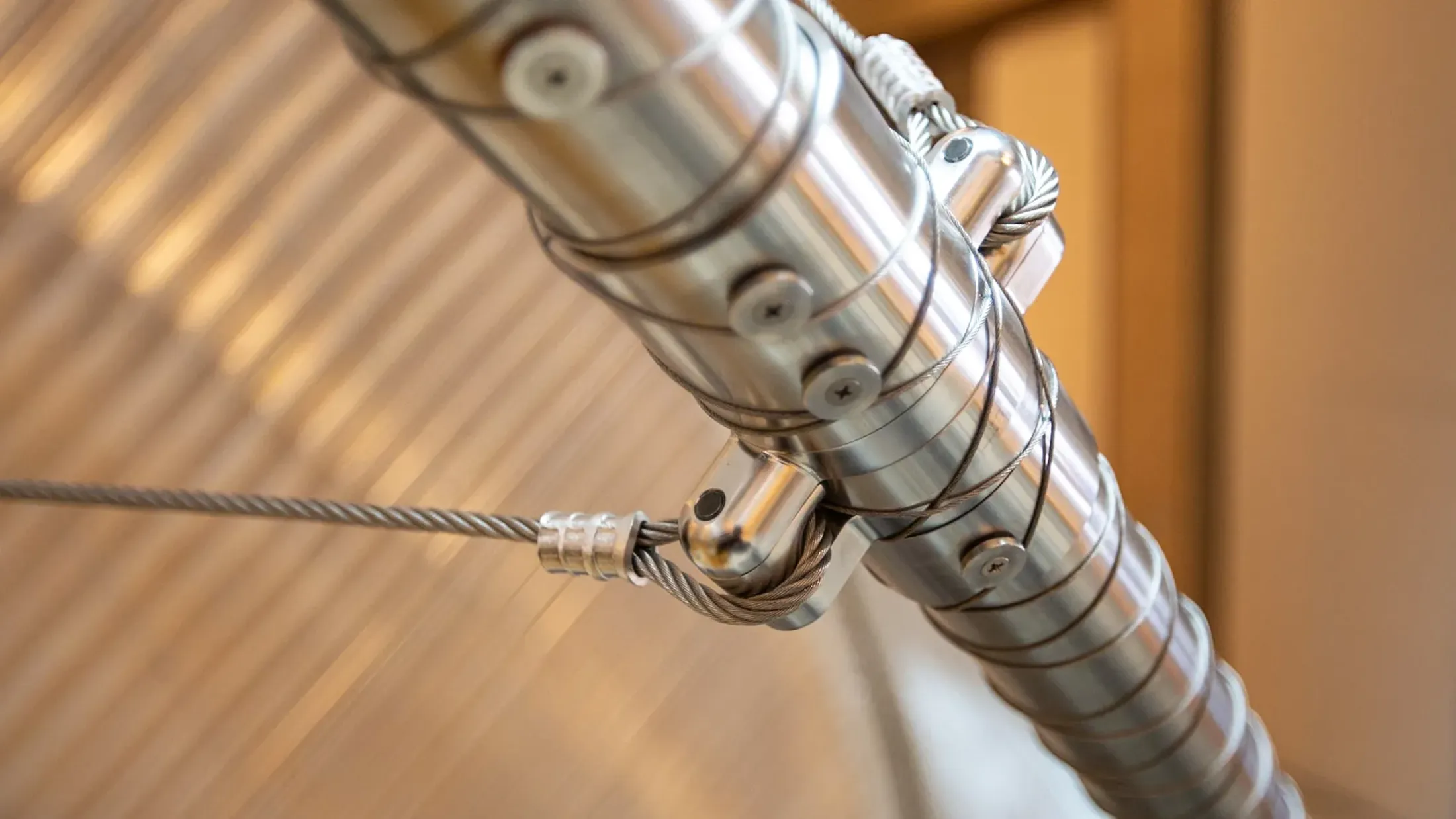
Each stalk consists of pleated ribbons of glass tubes set at diagonal angles and supported by metal spines. Image credit: Nikolas Weinstein Studios
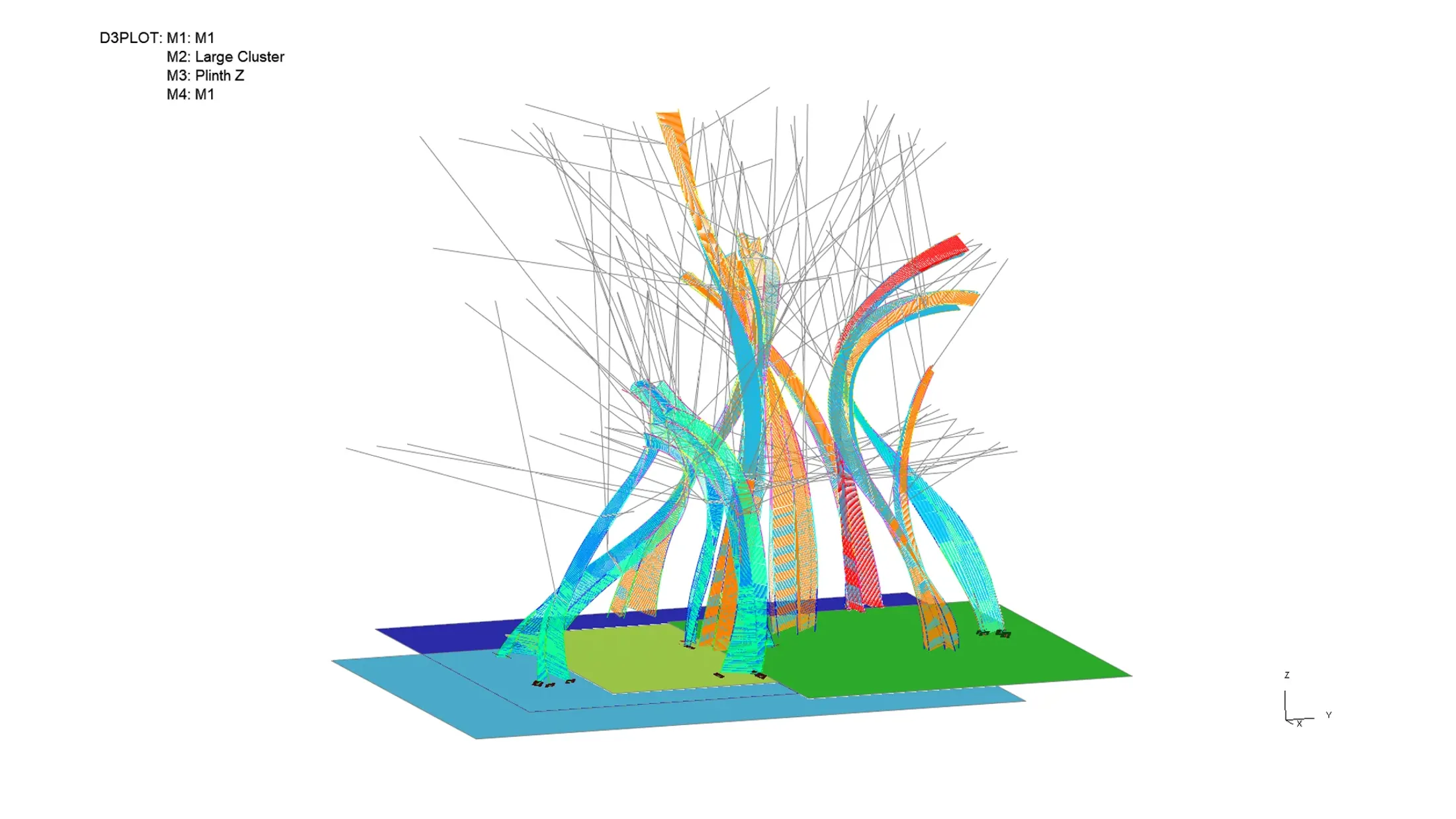
The team used a cycle of digital modelling, hands-on testing and collaboration to push the boundaries of what’s possible with large-scale glass installations.
Innovating with glass and steel
Composed of glass and stainless-steel elements arranged across eight base plinths, the piece sends slender stalks upward, curving and tapering as they ascend. Each stalk consists of pleated ribbons of glass tubes set at diagonal angles and supported by metal spines. As they rise, they twist and weave together, forming points of contact and structural interaction. While the lower sections rest firmly on the ground, the upper portions are suspended from cables, giving the entire sculpture a dynamic, floating presence.
The glass tubes were custom designed with internal flutes to refract light, while securely held in place by end plugs and bespoke sleeves. Each tube was cut to a specific length, fire-polished, and shaped in a kiln using molds to create organic, irregular forms. These tubes were assembled into mats using laser-cut jigs and wired together to maintain spacing and prevent contact. The mats were then bound to stainless steel spines, transferring tension and compression through the wires and plugs, resulting in an installation that is both visually intricate and structurally robust.
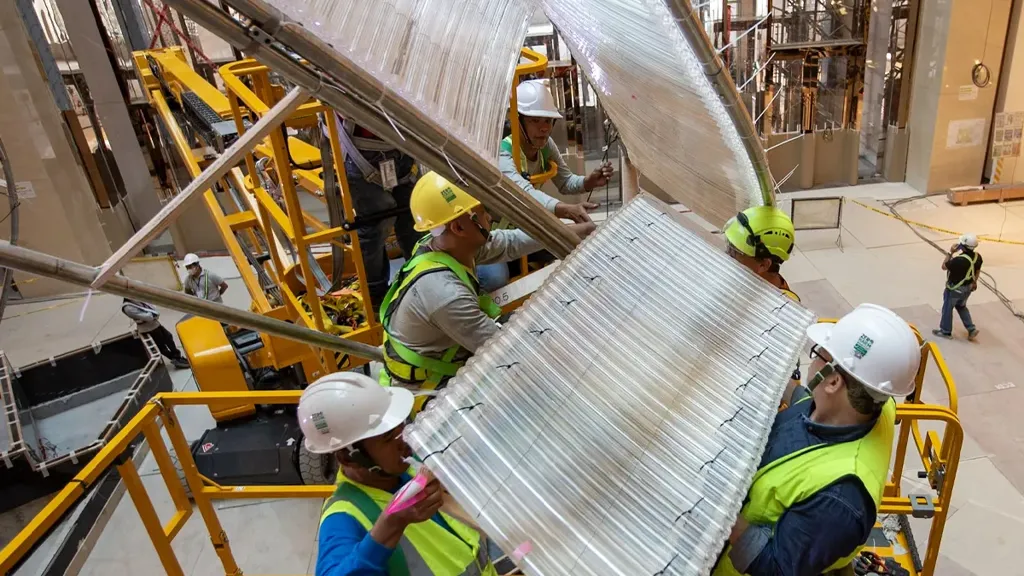
The simulations ended up being a lot more complicated than I think any of us anticipated, just because every single piece was doing a slightly different thing, and all those things had to be iterated with all the different seismic cycles.
Simulation testing for real-world scenarios
Located in Manila, the capital of the Philippines and part of the highly earthquake‑prone Pacific Ring of Fire, the site presented a significant seismic challenge. The structural design focused on ensuring the sculpture’s integrity, buildability and resilience.
The sculpture’s flexible, complex form and material posed unique engineering challenges. We used Arup-developed tools Oasys GSA and Oasys LS-DYNA Environment to analyse the sculpture’s behaviour in response to dynamic events such as earthquakes. Its irregular geometry required hundreds of hours of modelling to understand how the glass tubes, cables and spines would respond. Physical tests validated these simulations, guiding design refinements that reduced stress and improved resilience.
Sustainability and lifecycle design
Mangrove was designed with disassembly and reuse in mind. No bonding agents were used, allowing components to be separated at end-of-life. Despite its scale, the sculpture is materially efficient, suspended from the building and requiring minimal structural mass. This approach aligns with circular design principles and reduces environmental impact.
Creating the ‘Mangrove’ sculpture was a shared journey, where artistic vision and engineering insight evolved together. The team combined parametric modelling, physical testing and advanced structural analysis, alongside hand sketches and hand calculations, to turn an intricate form into a buildable and resilient piece of art, and push the boundaries of large-scale glass installations.
The project also emphasised the need for precise installation and regular monitoring to keep the sculpture stable over time. Looking ahead, improvements could focus on refining how cables are arranged in complex structures and better balancing the stiffness of the supporting spines with the number of cables used.
Nikolas Weinstein Studios
Projects
Explore more arts and culture projects

Delivering lighting, acoustics, AV, and theater design for the Theodore Roosevelt Presidential Library
Theodore Roosevelt Presidential Library, USA

La Sagrada Família: a collaboration in digital and stone
Sagrada Família, Spain

Revitalizing the National Geographic Society’s headquarters with a new Museum of Exploration to showcase storytelling for explorers of the future
National Geographic Museum of Exploration, USA

A net-positive botanical garden built for research and resilience
Marie Selby Botanical Gardens, USA
Get in touch with us
If you'd like to speak to one of our arts and culture experts then please get in touch by completing the form.
