
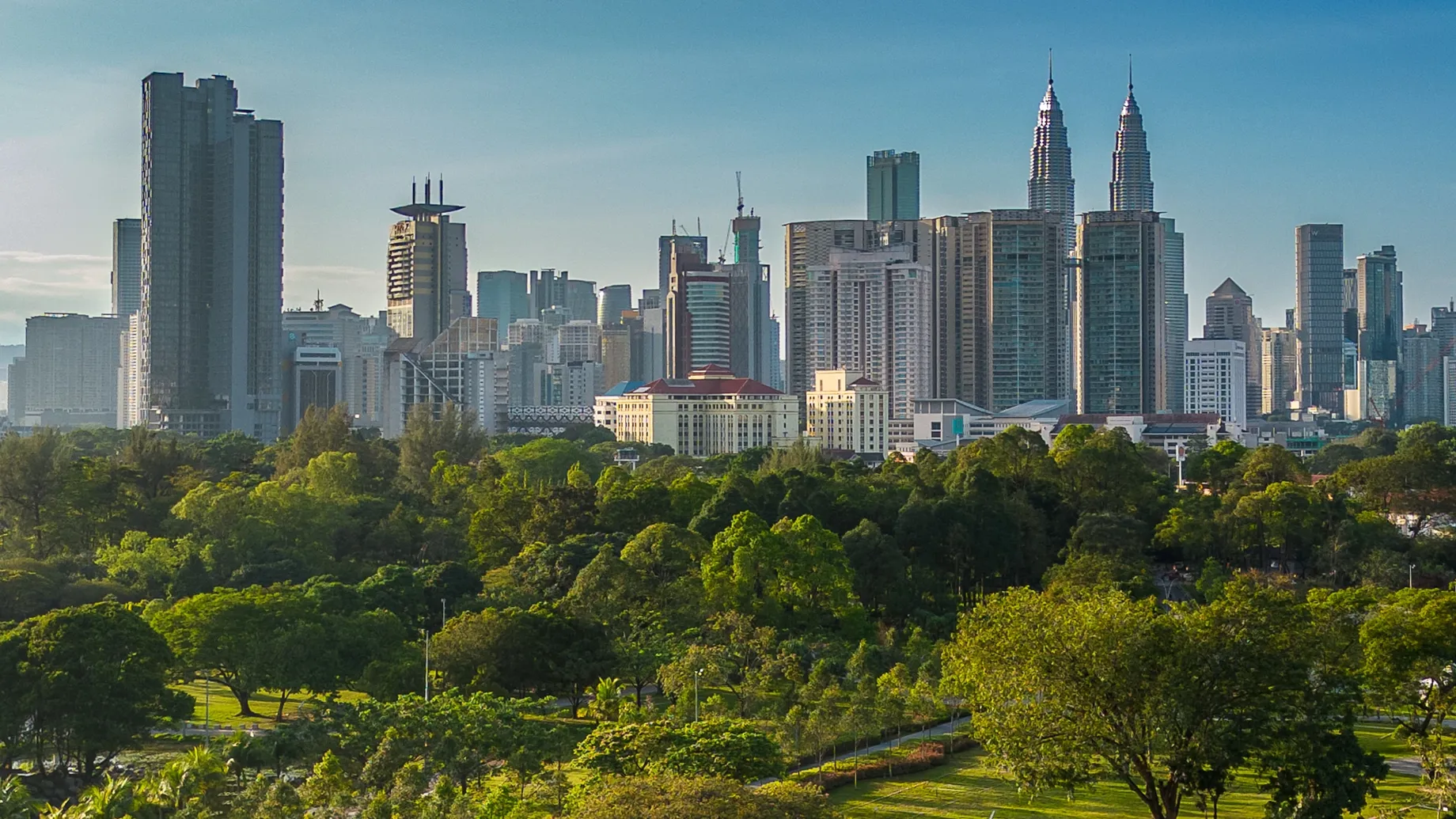
Heat resilience
In the climate change era, managing heat effects is becoming an increasing issue – rising temperatures are affecting how businesses perform, how cities function, how infrastructure holds up and how people live, work and stay safe. Heat impacts are no longer theoretical, they’re driving increased mortality, productivity loss, energy blackouts and energy use spikes, pushing up operational costs for private companies. For many it’s a new and unfamiliar challenge, raising complex questions around causes, workable adaptations and retrofitting of existing buildings and structures.
At Arup, our heat experts bring together rigorous science, data and analytics, strategic thinking and real-world experience of implementing solutions in the built environment. We work for local and regional authorities responsible for the impacts of heat on towns and cities; developers shaping commercial and residential estates; and transport operators dealing with climate impacts on the major transit networks. Our ultimate goal is to deliver liveable, resilient, healthy environments and systems, where heat is a manageable issue and people can thrive.
How we can help
We support clients across the full breadth of the heat resilience lifecycle – starting with a deep understanding of the issue and its causes, through strategic planning to the implementation of practical solutions. Our approach has three stages:
Assess
Heat mapping and thermal modelling
Advise
Heat risk strategy
Act
Heat design and engineering
How heat shapes key sectors
-
1
Property
As a complex sector, property faces different versions of the climate change threat. In many countries the race is on to retrofit homes and offices designed for a radically different climate, to ensure that populations of all ages can cope with increasing temperatures and more extreme weather more broadly. We work as a strategic partner to local authorities and developers alike, to identify workable adaptations for single buildings or whole districts.
-
2
Transport
Public transport systems are the connective tissue of the modern economy – but they face large and scaling threats from rising temperatures, like buckling rails, deformed tarmac roads or runways, and the failure of key support equipment and technologies. Drawing on our deep understanding of highways, rail, and aviation infrastructure, we help clients to identify risks and plan mitigations that are cost effective and sustainable.
-
3
Energy
For operators and owners across the energy sector, rising temperatures present a generational challenge for infrastructure that every country depends on. Heat risks manifest in a complex range of ways, from direct impacts on exposed infrastructure to the increase in wildfires and damage to energy networks. We use a three-stage analysis approach to help energy players identify risks and plan a programmatic response.
-
4
Data centres
For the fast-growing data centre sector, heat has always been a central performance issue – but climate change heat increases present a major future operating constraint that must be planned for and mitigated. Additionally, data centres are being pushed further by the needs of artificial intelligence GPUs and the need for ever more effective cooling. Our data centre teams help clients to bring these engineering issues and insights together to develop a heat risk plan that can drive more efficient data centre designs or retrofitting measures.
Projects
Discover our work:


Issues
We explore some of the biggest questions facing the built and natural environments.

Explore
Discover more of our expertise:
Experts
Contact our team today:

Dimple Rana
Asssociate Director
Dimple Rana is an Associate Director at Arup and leader in heat resilience. She specialises in environmental physics, applying advanced modelling, climate analysis and data-driven approaches to address the growing risks of extreme heat across buildings, neighbourhoods and cities.

Dimple Rana
Asssociate Director
London, UK
Dimple Rana is an Associate Director at Arup and leader in heat resilience. She specialises in environmental physics, applying advanced modelling, climate analysis and data-driven approaches to address the growing risks of extreme heat across buildings, neighbourhoods and cities.