
Five ways to supercharge the UK’s Northern Growth Plan
The UK’s northern towns and cities have clearly articulated regeneration goals. With the Northern Growth Plan now gaining momentum, we explore five ways that central Government and local leaders can ensure progress is made and sustained.
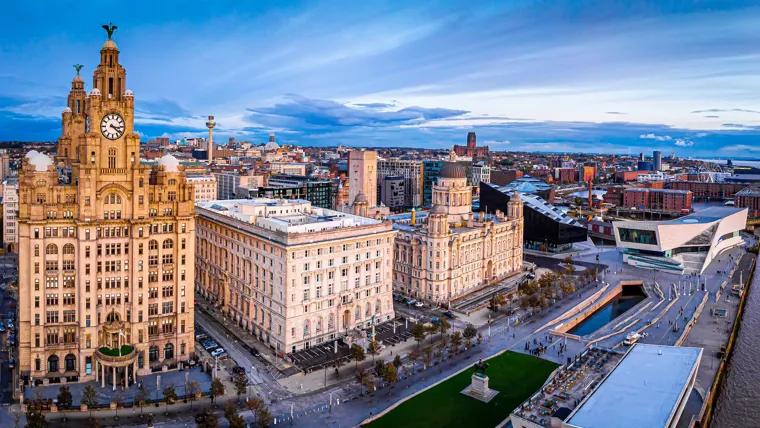


The North of England is one of the most vibrant parts of Europe – with natural landscapes that rival those of anywhere in the world and globally-recognised exports ranging from music to sport, design to advanced manufacturing. The momentum and dynamism of this region is palpable, and strong recent growth trends back this up:
- Manchester’s 1% annual growth rate over the last 10 years is double the national rate.
- Leeds is one of only two UK core cities that are a net contributor to the Exchequer.
- Warrington has recently been dubbed ‘a southern city in the North’ by the Guardian thanks to a growth rate that is 2.2 times faster than the UK average.
But there is more to do to close the gap in economic performance and living standards between the North and other regions in the UK and globally. The Government’s ‘Northern Growth Corridor’ (NGC) initiative sets out the case for an integrated economic strategy aimed at channelling recent momentum into long‑term, inclusive growth – spanning transport, housing, energy, skills and more. The ‘size of the prize’ is estimated as being at least £40 billion in GVA (+1.5%) per year – and potentially far more.
A feeling of ‘we’ve heard this all before’ will undoubtedly be the response of many, following decades of stalled promises and plans. However, there are signs that suggest change can be real and enduring this time. A new generation of empowered Mayors, more flexible funding settlements, and growing confidence in locally‑led delivery models are reshaping what is possible. The challenge is no longer about articulating the case for change, but about converting ambition into delivery at pace and at scale.
Five guiding principles for the Northern Growth Plan
From our discussions with public and private sector leaders across the corridor – combined with success stories we’ve seen globally – we have five ideas for the forthcoming Northern Growth Plan that will help turn opportunity into real outcomes for people and places.
1: Set out a clear pipeline of investment priorities
The UK’s national 10-Year Infrastructure Pipeline is a helpful start, but a more detailed investment blueprint is needed for the NGC. Giving the private sector clarity on when and where key transport, energy, water and other infrastructure projects will be delivered improves confidence in their investment decisions, amplifying the benefits. A committed pipeline also provides confidence for supply chain partners to invest in local skills and facilities, ultimately lowering infrastructure delivery costs and creating jobs.
Greater Manchester’s recent ‘integrated pipeline’, which captures the projects and interventions needed to deliver GM’s growth ambitions, is a good example of this. The Australia and New Zealand Infrastructure Pipeline is another great model, which in addition to the above benefits also clearly identifies ‘investable’ projects suitable for alternative sources of finance. Replicating these models across the NGC would be a powerful enabler for change.
2: Double-down on devolution
The days of top-down decision-making for the North are clearly over. Devolution has been turbocharged in the current Government, but we need to go even further, as we are still behind the level of local control provided by most other peer countries. Local places need the tools and powers to ensure that high-quality, high-value growth outcomes are delivered on the ground through investments such as Northern Powerhouse Rail. This means:
- Further fiscal devolution, including the ability to raise and spend funds locally.
- A coherent framework for using Land Value Capture as a funding mechanism – a popular concept in theory, but one which is largely untapped in the UK as it requires complex and bespoke agreements across government actors to implement. Local places need a more consistent and coherent approach, for instance around the ‘rules of the game’ for Business Rates retention schemes.
- Broader land acquisition powers to allow Mayors to step in and drive growth in a more comprehensive and strategic manner, particularly around transport nodes.
For regional-scale projects, the new partnership approaches being pioneered by the Liverpool-Manchester Railway Board and the White Rose Mayors shows that local leaders can work together to find consensus on major infrastructure projects. These approaches can help avoid the sense that large schemes, such as Northern Powerhouse Rail, are imposed ‘top down’ on local communities.
3: Focus on supporting medium-sized firms and smaller towns and cities
There is often a tendency to focus on the needs of start-ups or large firms in economic policy. However, despite making up less than 1% of all UK businesses, mid-sized firms account for roughly one-quarter of national GVA, and according to BDO are expected to contribute 41% of total GVA growth in the next three years. Germany’s experience shows the potential – Germany’s Mittelstand firms account for more than half of the country’s economic output. Clearly, mid-sized firms punch above their weight and should be a focus of the Northern Growth Plan.
Most people live in the North’s towns and smaller cities, and these also need to have a well-defined focus in the plan. For instance, Wakefield has exploited its connections to Leeds and London to achieve one of the fastest growing levels of disposable incomes in the UK – building on historic manufacturing strengths alongside new industries, exemplified by SEWTEC Automation’s new headquarters. From Stockport to Bradford and Warrington to Huddersfield, these places can thrive as part of a growth strategy that exploits proximity to city centres whilst building on their individual strengths and assets.
4: Develop a new approach to intra-urban mobility
Travel within the North’s city-regions lags woefully behind similar European places, according to analysis from Centre for Cities. For example, only 38% of residents can access the city centre of Leeds within 30 minutes by public transport, compared to 87% in Marseille, a similar sized city. At the same time, accessibility by car is also worse in the North’s cities compared to many in the US, according to Harvard Business School. The evidence is clear that moving within city-regions – by car or public transport – is much harder in Northern cities than it should be. This has direct consequences for economic opportunity and growth.
Cities across the NGC recognise this, but there remains a frustrating lack of clarity on how urban mass transit schemes should be designed and taken forward, as evidenced by the recent decision on the West Yorkshire metro – where despite both local and national political support and committed funding, the scheme has been again delayed.
We need to join up efforts across the country and create a common policy, analysis, and funding framework that provides scheme promotors with a clear understanding of the pathway for delivering mass transit. One quick win here could be in procurement: with the tram fleets of both Greater Manchester and South Yorkshire beginning to age and West Yorkshire requiring a tram network in the future, there should be opportunities to combine procurement and exploit efficiencies of scale – an approach successfully used in France.
We also need to shift the focus in mass transit business cases away from rehearsing arguments about strategic value and constant fine-tuning of economic appraisals, when the effort is best spent focusing on delivery, funding and commercial models. The case for mass transit in the North has been made. Now let’s deliver it.
5: Get started with delivery and expand from there
The region’s Mayors have been successfully delivering local priorities, but there now needs to be a substantial step-change to deliver larger and more complex programmes and growth outcomes. Despite increased focus on delivery in recent years, this continues to be a frustration for local and national leaders; research shows the UK is far behind peer nations in the pace and certainty of infrastructure delivery.
This is a complex challenge, but in simple terms this requires collaborative working across the region and an honest assessment of trade-offs. Funding will remain constrained at all levels, and improved collaboration does not mean that everyone simply combines their ‘wish lists.’ Honest conversations and effective decision-making that balance across affordability, deliverability, and value creation are required.
Leaders then need to start with small first steps rather than trying to solve the entire puzzle at once. Delivering discrete, ‘bite-size’ phases – within context of a longer-term vision and pipeline – is essential to building confidence among local residents and businesses that change is happening.
The moment is now
From Media City in Salford to Leeds South Bank, Liverpool Waters to Sheffield’s Heart of the City, the region has recent experience of using transport and urban development to transform places. The context has changed now: a pro-development and pro-growth Government, coupled with ambitious Mayors and increasingly mature devolved authorities, have created the right environment to get the Northern Growth Plan right.
Our experience in regional regeneration
Find out more about Arup’s long-standing role in delivering infrastructure, growth and regeneration across the Northern Growth Corridor:


Get in touch with our team


Explore
Discover more of our expertise:
Insights
Explore more cities insights
How Alberta could shape the future of the Winter Olympics

Rethinking our fear of hosting the Games

The opportunity of host city moments: Rethinking how cities partner with community organizations

Designing for the night: why 12-hour cities can’t sustain a 24-hour economy
