
Engineering a living architecture
EXPO National Day Hall ‘Ray Garden’ at Expo 2025 Osaka
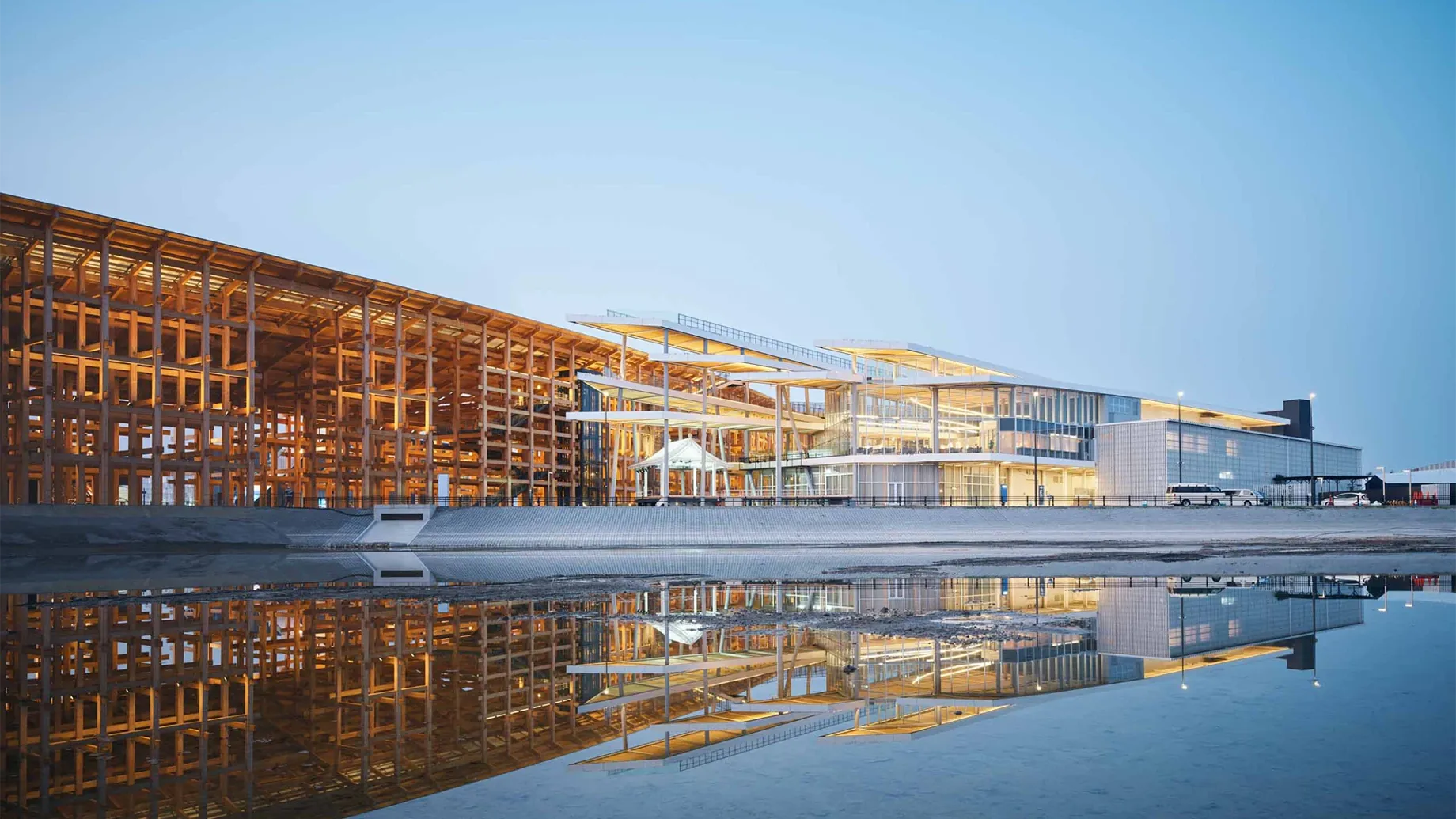
Located on the man-made island of Yumeshima, the EXPO National Day Hall ‘Ray Garden’ is one of the signature venues of Expo 2025 Osaka, Kansai, Japan. It is a unified complex comprising a main hall for ceremonies and performances, exhibition spaces, and a restaurant-lounge. By allowing terraces, shaded zones, and indoor spaces to intersect organically, the spatial composition intentionally blurs the boundaries between interior and exterior, creating a sense of openness and offering varied experiences.
The facility accommodates a variety of functions, including a main hall with approximately 500 seats, an outdoor stage for traditional performing arts, exhibition areas, and a dining lounge with seating for 280. To create spaces that harness connections with the surrounding environment and cultural context, we provided structural and MEP engineering services during the project’s early design phase, working in collaboration with architect Akihisa Hirata in collaboration with Yasui Architects & Engineers.
The EXPO National Day Hall ‘Ray Garden’ also serves as a stage for celebrating the National Days of participating countries, becoming a symbolic space that showcases global diversity. Our engineering expertise supported a bold architectural vision that redefines the relationship between people, nature, and space – demonstrating how sustainable design can shape the future of architecture.
Organic spatial design connecting inside and outside
The diagonally inclined, ribbon‑like slabs – whose layered form evokes the stratified geology of the Kansai region – are oriented along the prevailing winds from the Yodo River, promoting natural ventilation and creating a connection with the surrounding environment and cultural context. Each space is unified through fluid circulation and an inclusive design approach that encourages active visitor engagement.
The spatial composition intentionally blurs the boundaries between interior and exterior, as terraces, shaded areas, and indoor spaces intersect organically to create openness and varied experiences.
Structural innovation for spatial freedom
This building aspires to be a ‘topographic living organism’ – an architecture shaped by the flows of wind, water, and people – offering a new vision for harmonious coexistence with nature. Our role was to transform this vision into a robust and sustainable reality.
To support the distinctive ribbon-like roof, we designed a steel moment-frame structure incorporating braces and inclined columns. Above the event space, the gaps between overlapping floor plates were used to form a truss system, achieving a maximum span of 34m and enabling a spacious, flexible interior.
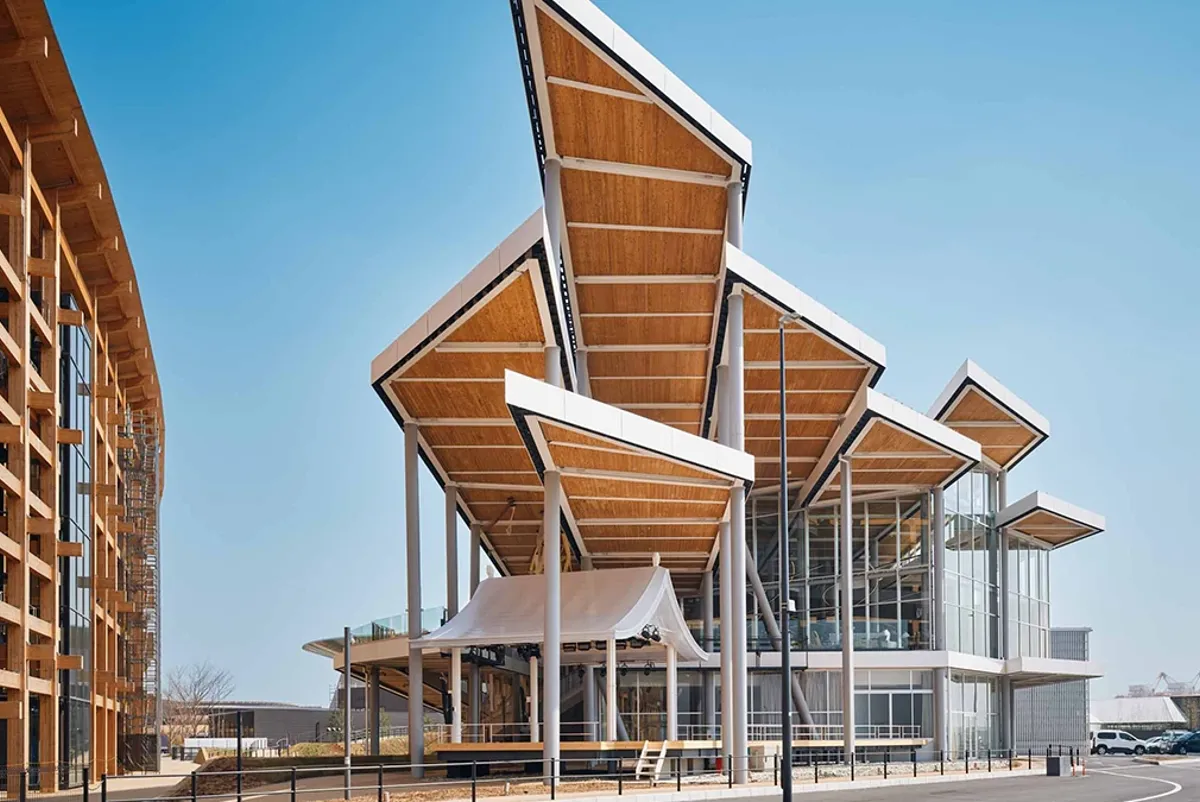
The facility features a main hall for ceremonies and performances, exhibition spaces, and a restaurant-lounge. © Kenya Chiba
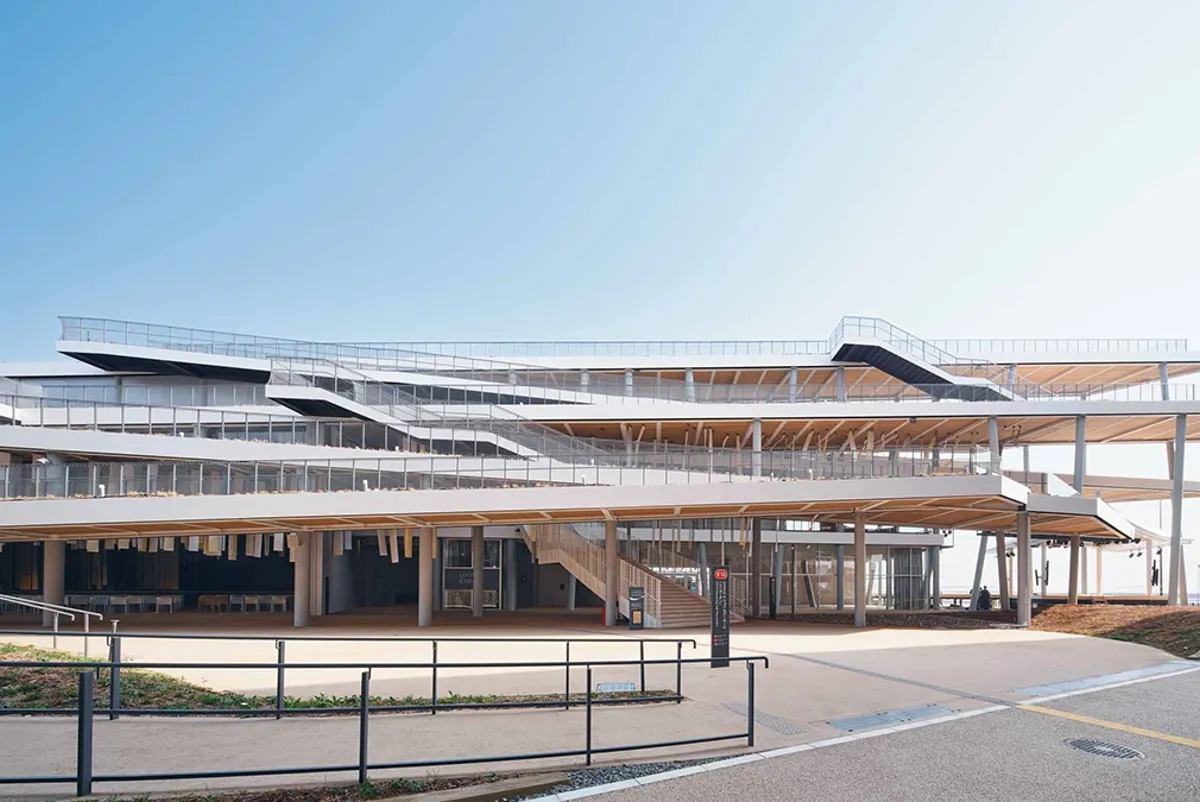
Series of diagonally inclined, ribbon-like slabs that overlap in layers, evoking the stratified geology of the Kansai region. © Kenya Chiba
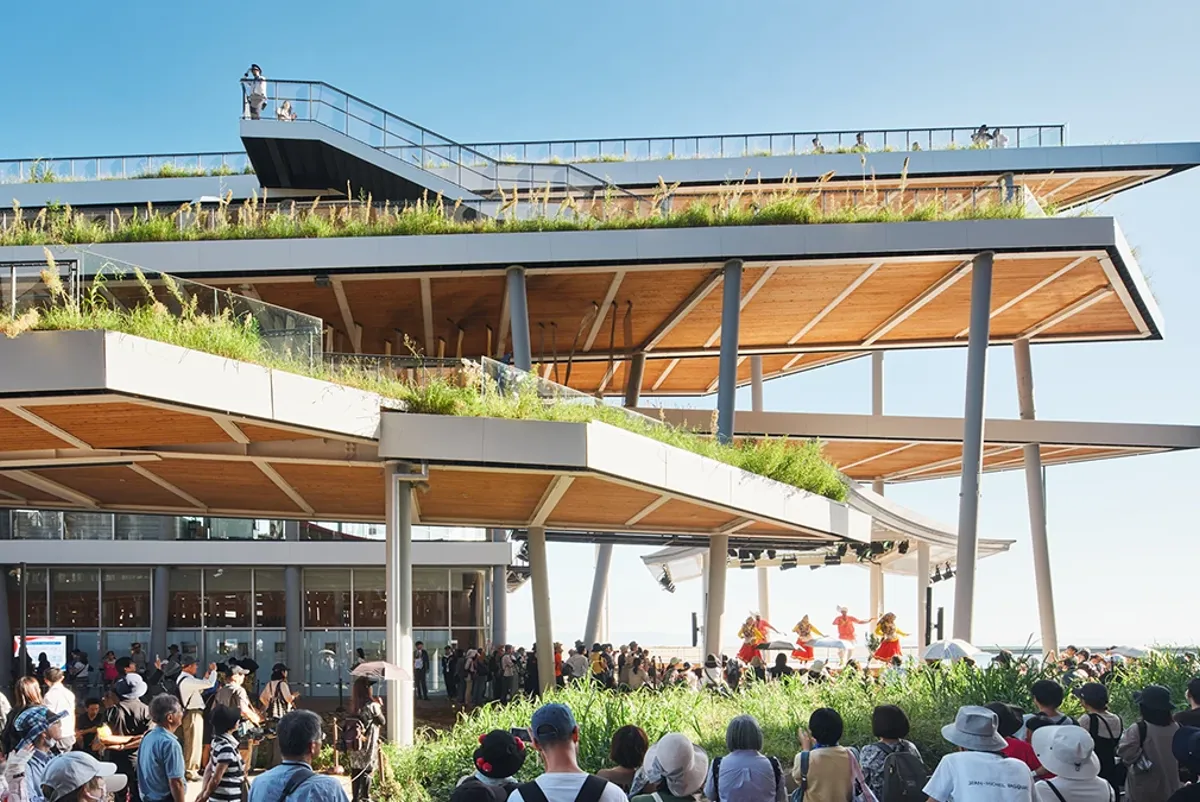
Oriented along the prevailing winds from the Yodo River, these slabs promote natural ventilation. © Kenya Chiba
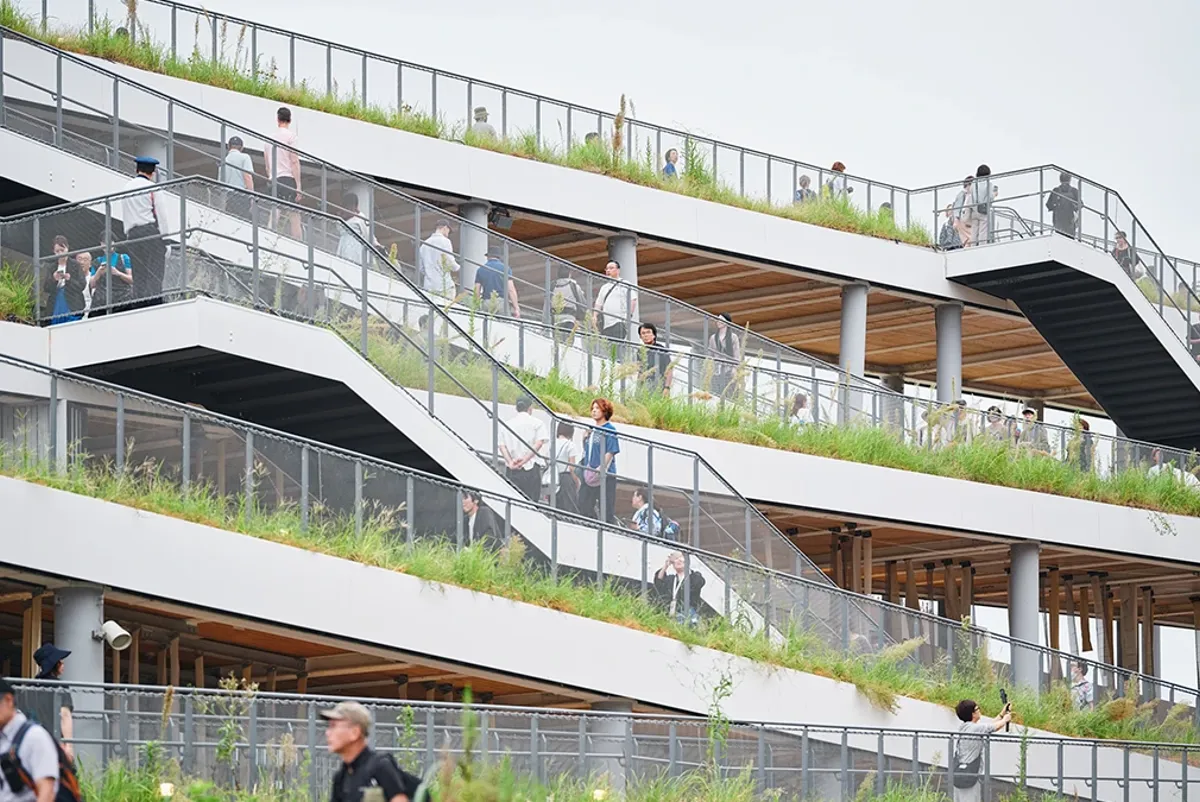
A ‘living architecture’ has emerged where people and nature engage in dialogue. © Kenya Chiba
Sustainability embedded in design
In alignment with the Expo’s sustainability goals, the floor slabs incorporate reusable 120mm² cedar members, contributing to structural lightness and reduced embodied carbon. The careful arrangement of inclined columns and braces delivers both seismic resilience and a sense of spatial openness.
Beyond meeting the functional requirements of the Expo, the building embodies a concept of ‘living architecture’ that engages in dialogue with people and nature – offering a space designed to evolve toward the future.
Top image © Kenya Chiba
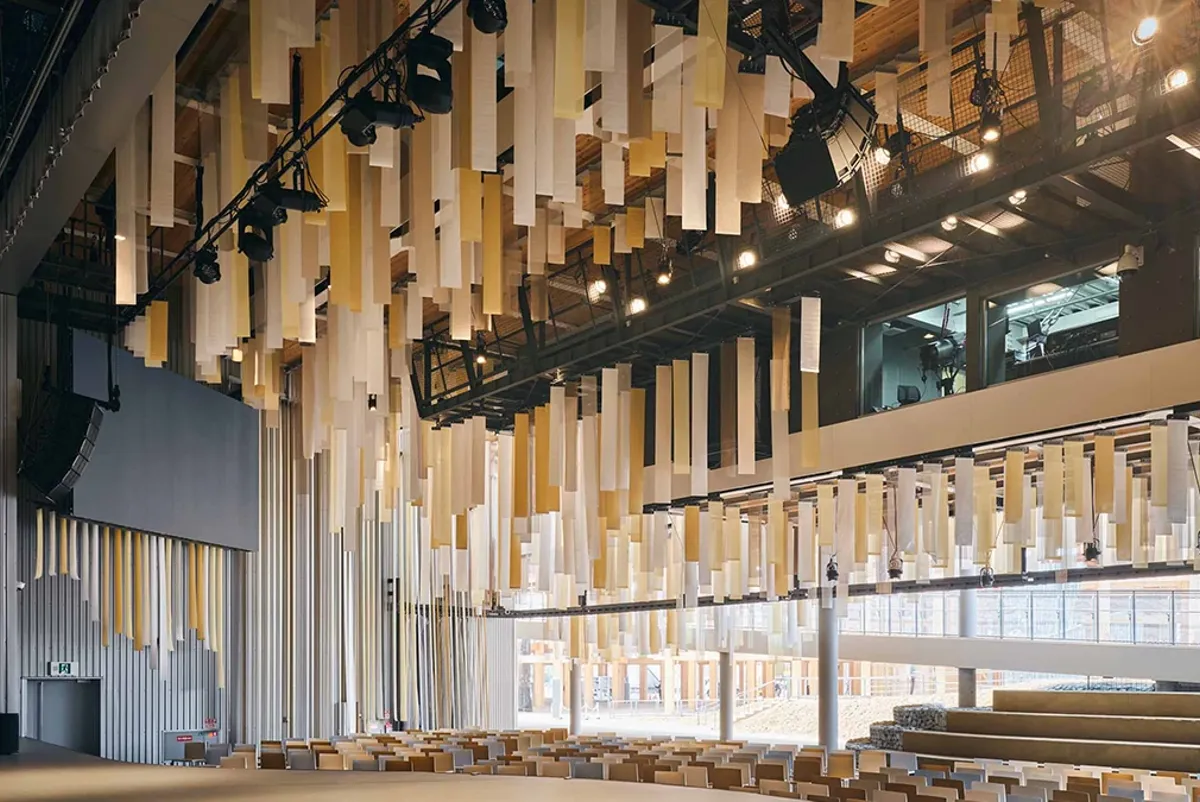
Achieved a 34m long-span structure balancing seismic resilience, structural efficiency. © Kenya Chiba
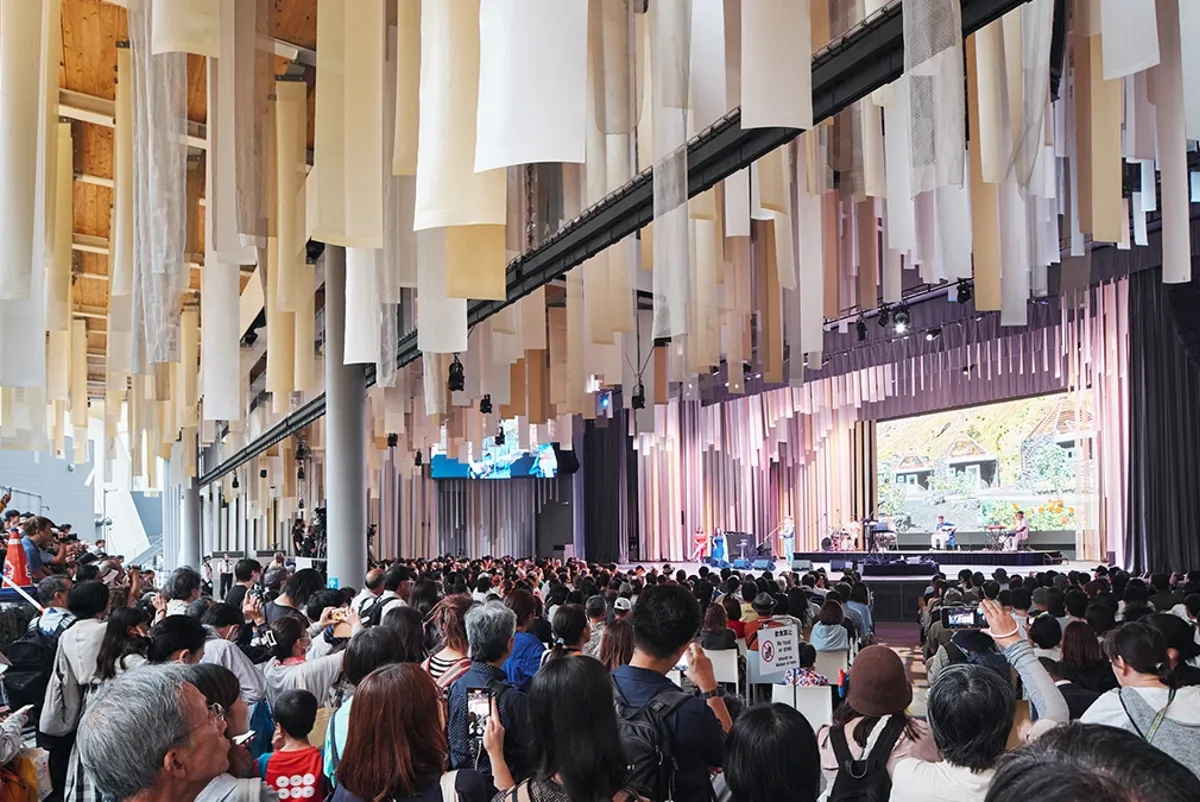
Served as a stage for celebrating the National Days of participating countries, as a symbolic space that showcases global diversity. © Kenya Chiba
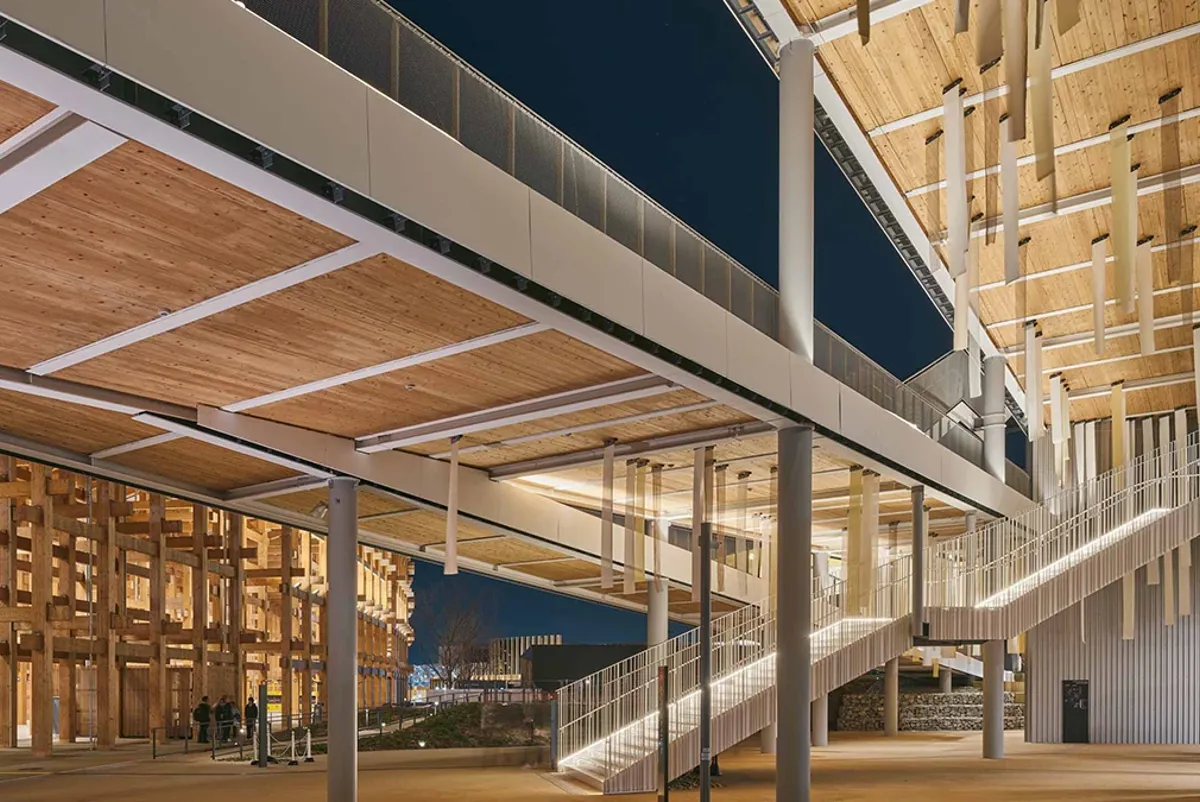
Through reusable cedar wood and lightweight construction, reducing embodied carbon. © Kenya Chiba
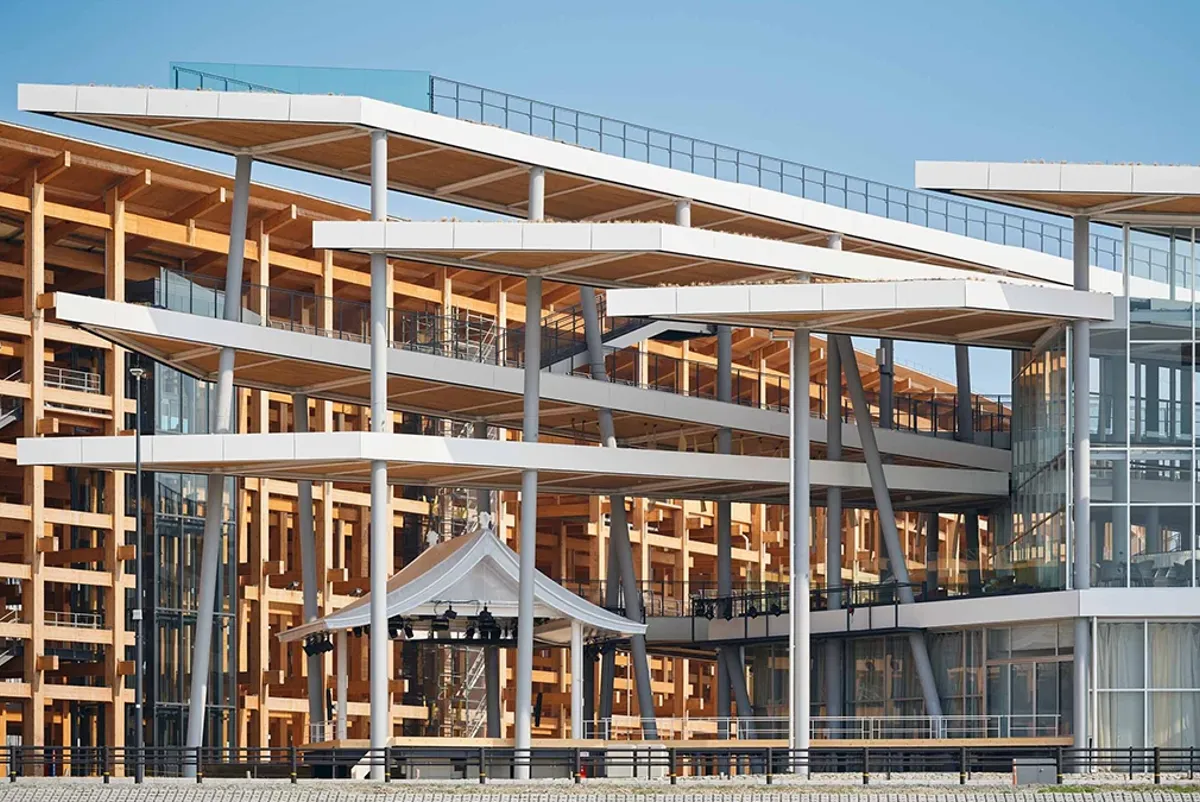
The composition of inclined columns and braces delivers both seismic resilience and a sense of spatial openness. © Kenya Chiba
Projects
Explore more arts and culture projects

Delivering lighting, acoustics, AV, and theater design for the Theodore Roosevelt Presidential Library
Theodore Roosevelt Presidential Library, USA

La Sagrada Família: a collaboration in digital and stone
Sagrada Família, Spain

Revitalizing the National Geographic Society’s headquarters with a new Museum of Exploration to showcase storytelling for explorers of the future
National Geographic Museum of Exploration, USA

A net-positive botanical garden built for research and resilience
Marie Selby Botanical Gardens, USA
Get in touch with us
If you'd like to speak to one of our arts and culture experts then please get in touch by completing the form.
