
Redefining urban timber construction through digital craft and collaboration
prewood
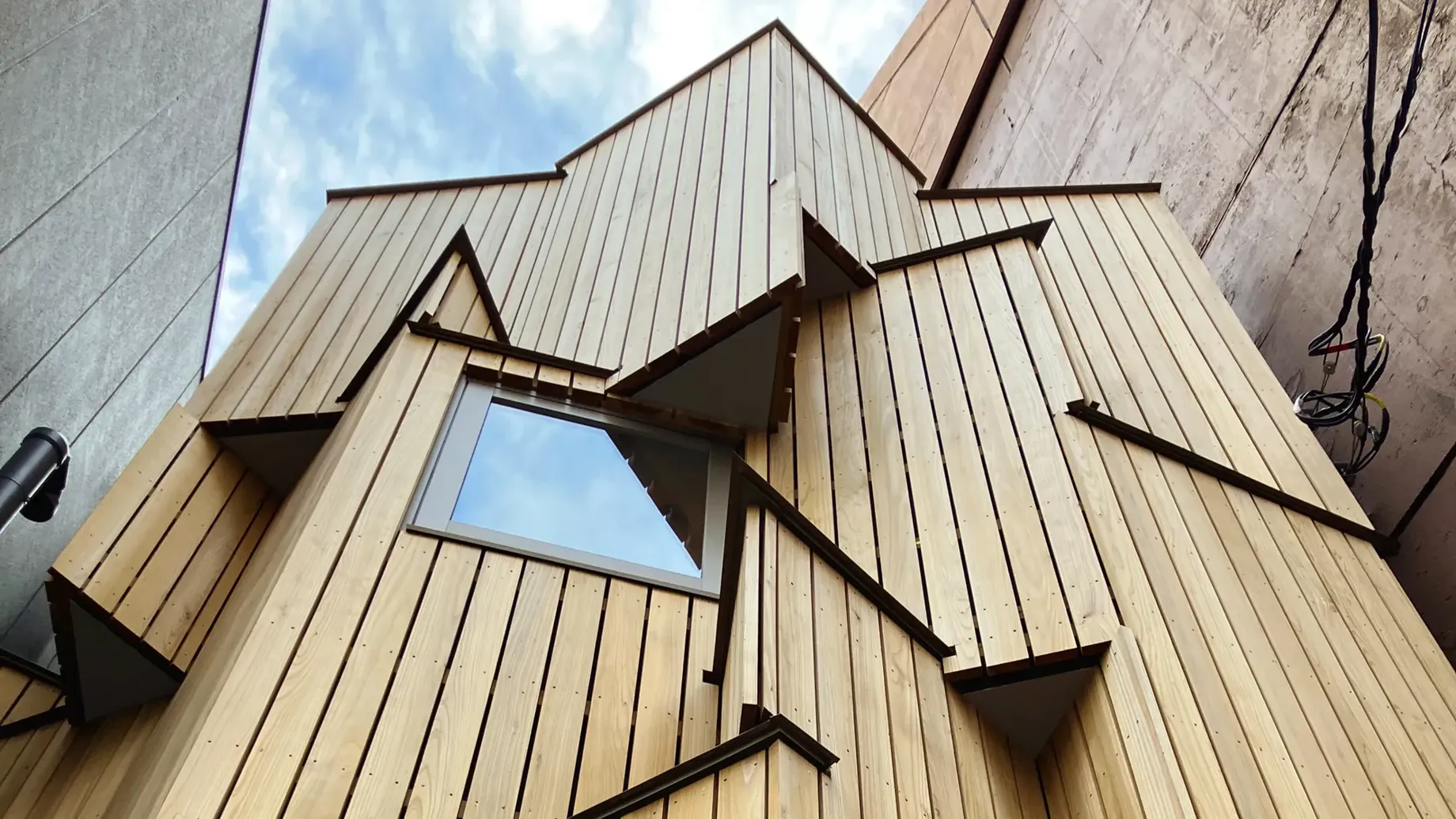
Completed in September 2025, prewood is a timber-framed urban building within walking distance of Tokyo Station, now home to a Taiwanese restaurant. The site measures just 4m wide and 12m deep – a plot so narrow it would have been difficult to use even as a car park. With a footprint of only 35m², delivering a functional two-storey structure demanded inventive solutions.
Developed by Heiwa Real Estate and designed by architecture start-up VUILD, the project features structural engineering and sustainability by Arup. Combining traditional Japanese carpentry techniques with advanced digital fabrication, the team achieved a high level of precision on this highly constrained site, minimising on-site work and enabling rapid assembly. This approach opens new possibilities for adapting timber construction to urban environments.
This project serves as a practical prototype demonstrating how architects, engineers, and developers can work together to achieve flexibility, speed, and sustainability under stringent constraints. By adopting construction methods that enable future dismantling and relocation, it contributes to advancing circular timber construction in dense urban environments. Furthermore, digital fabrication further expands the potential of timber and contributes to addressing the social challenges facing the construction industry.
Precision timber engineering through digital fabrication
To overcome the tight spatial constraints of the site, VUILD and our team reimagined the construction process by combining traditional Japanese carpentry techniques with digital technology. The placement of structural members and screws was modelled in 3D, digitally processed, and then CNC-machined in a factory.
Wall structures were prefabricated, with each module kept within a weight limit of 200kg for crane lifting, and transported to site. This ensured high precision whilst minimising on-site work, enabling the entire process – from assembly to installation – to be completed in just two days. These challenging constraints gave rise to an unprecedented approach, opening up new possibilities for timber construction in urban areas.
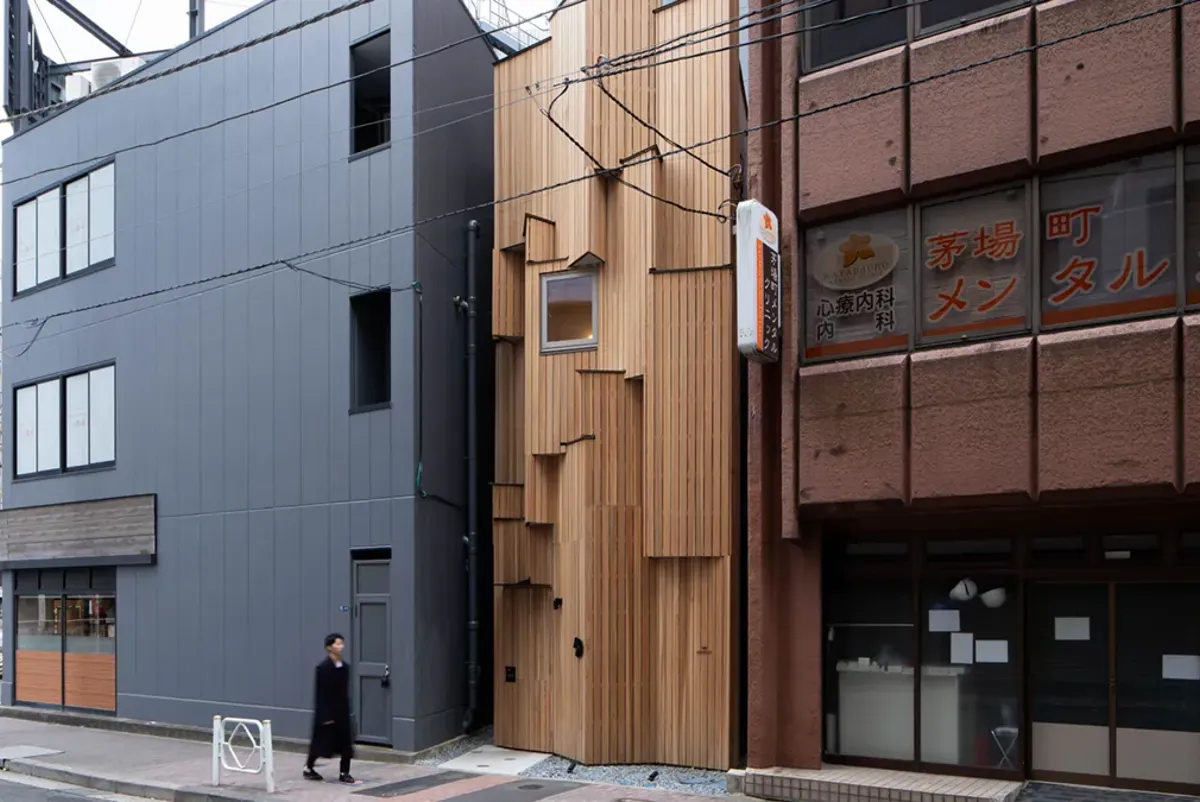
‘prewood’, a demountable and relocatable timber building designed for compact urban sites, opened in October 2025. © Hayato Kurobe
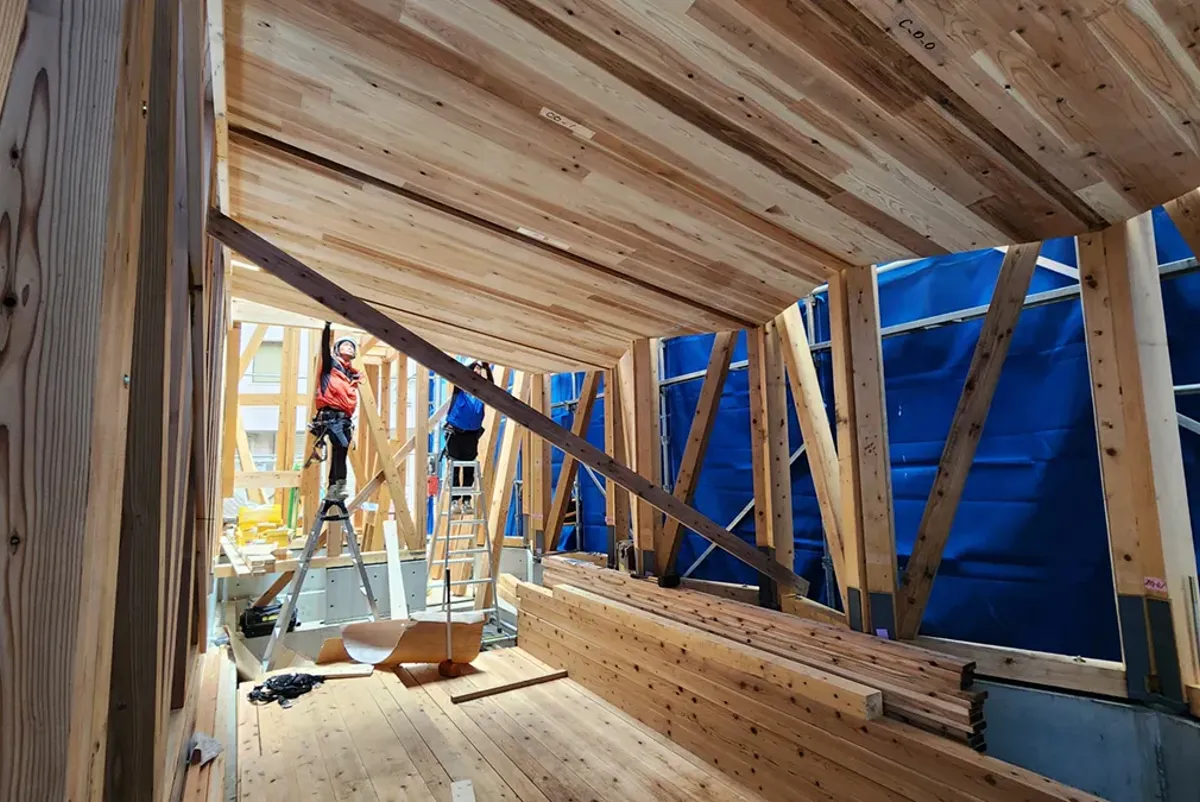
Structural components were modelled in 3D, digitally processed, and CNC‑machined off‑site. © VUILD
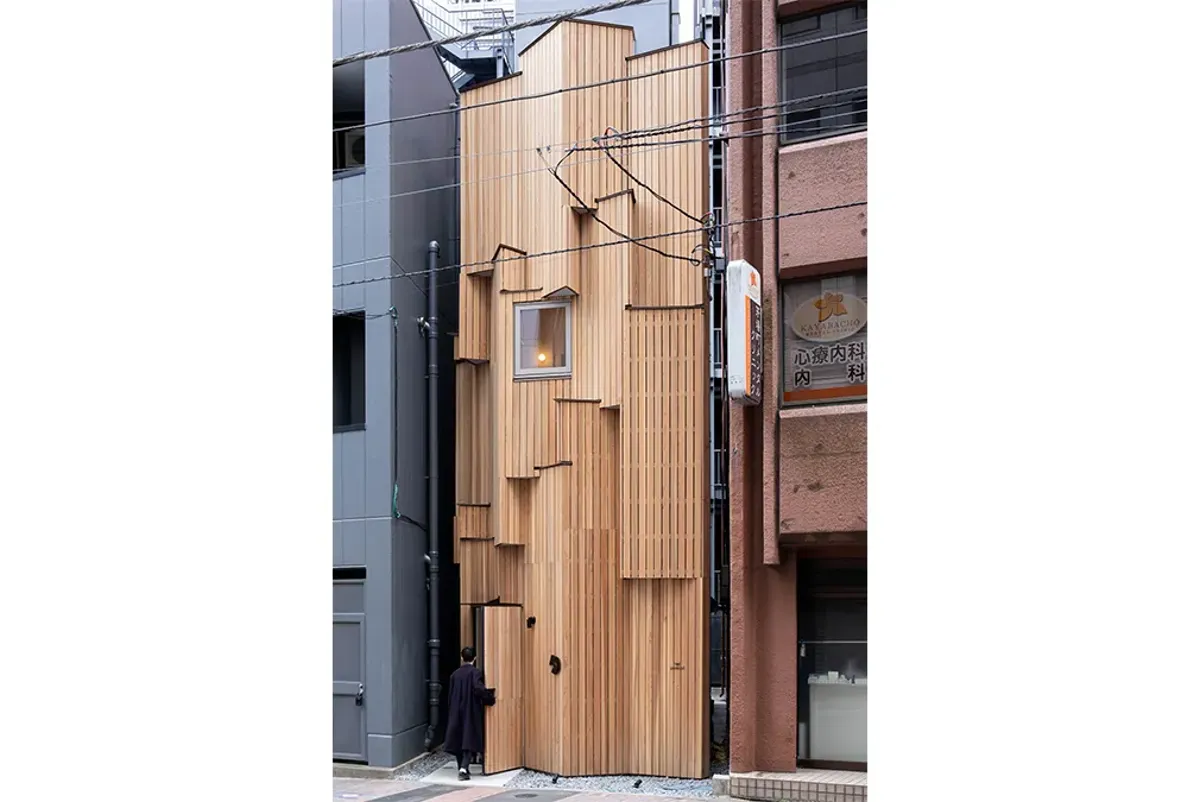
A circular timber-frame building that addresses the complex needs of the urban environment. © Hayato Kurobe
A circular, modular construction method designed for dismantling and reuse
Taking the site constraints into account, the building was divided into transportable units that can be assembled on‑site using only bolts and screws. By adopting a construction method that avoids adhesives and welding, future dismantling and reuse become far easier. This approach reflects the DfMA (Design for Manufacturing and Assembly) and DfD (Design for Disassembly / Dismantling) philosophies championed by VUILD. The structure combines compression bracing with screw connections to achieve both seismic resistance and ease of disassembly.
Our structural team played a key role in optimising the frame to ensure both efficiency and strength. As the constraints of the budget and the small site made it difficult to arrange conventional load-bearing walls, diagonally arranged CLT panels were adopted for the floors and ceilings to provide the necessary rigidity. By using advanced analysis tools to determine the optimal size and placement of each component, the project meets Japan’s seismic performance standards for mid‑rise timber buildings while minimising timber consumption. The result is a structure that demonstrates the emerging potential of timber construction: lightweight yet robust.
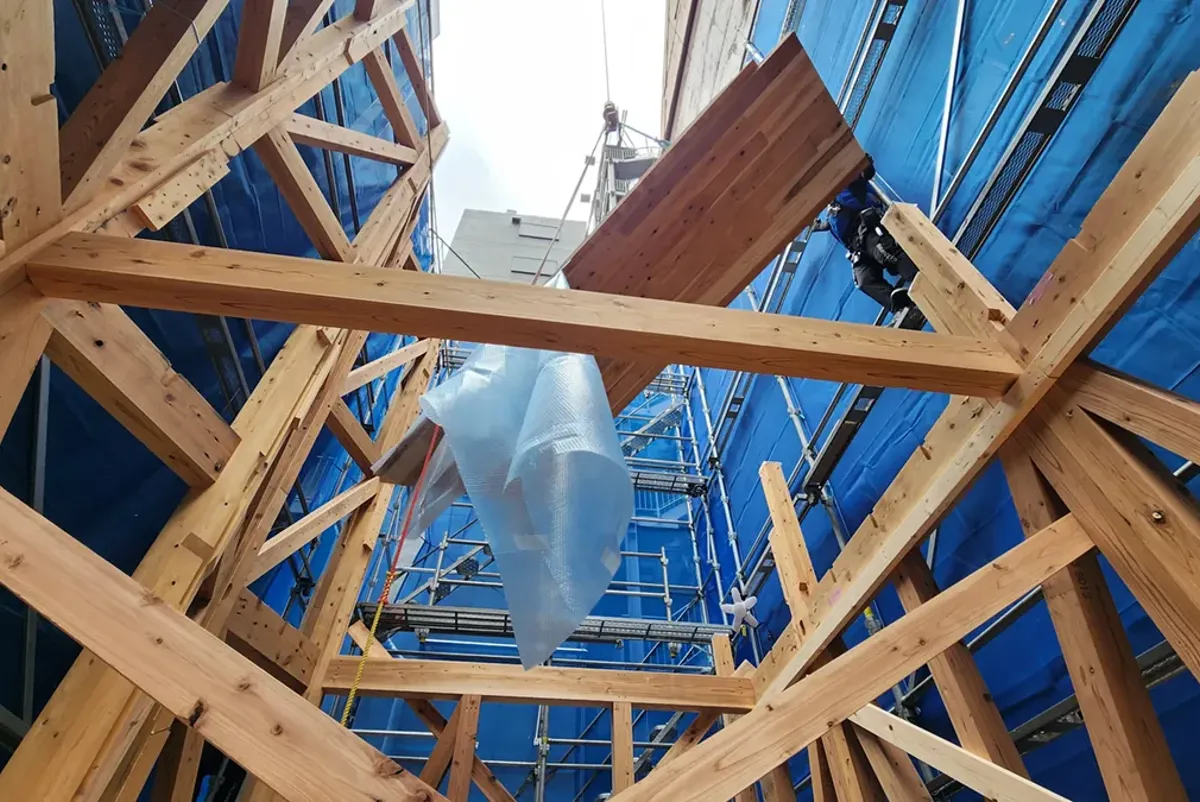
Using analytical tools, we optimised member sizes and layouts to meet seismic requirements while minimising timber use. © VUILD
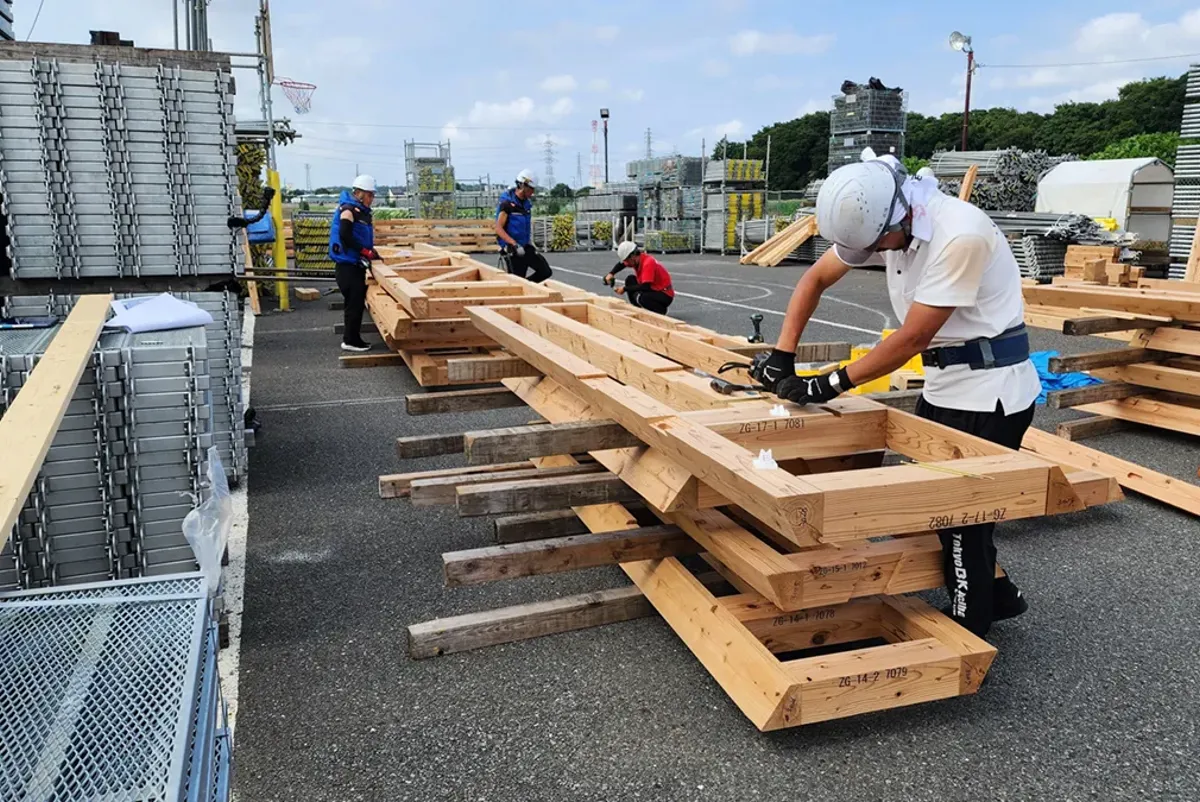
By adopting a construction method that avoids adhesives and welding, the structure can be easily dismantled and reused in the future. ©VUILD
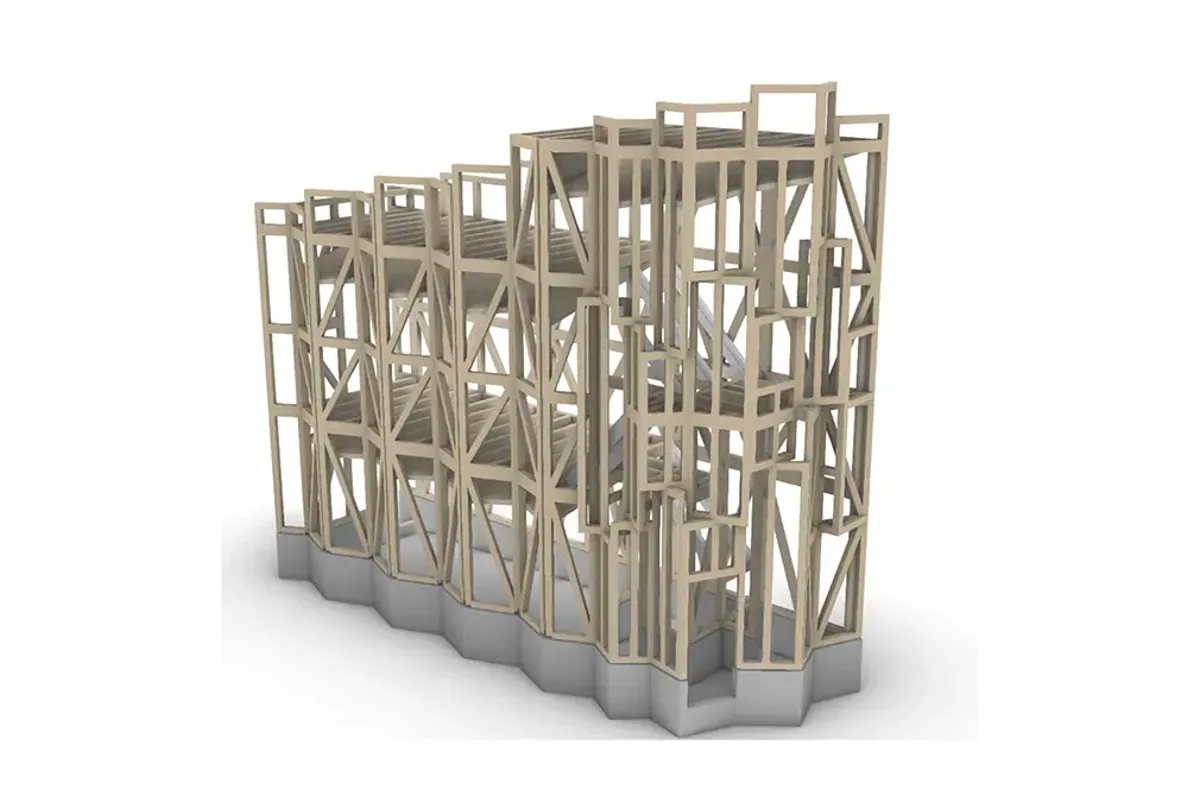
Combining traditional Japanese joinery with digital fabrication, we achieved high precision while minimising on‑site work. © VUILD/ Arup
Implementing passive and low‑carbon building performance
Our sustainability consultants worked closely with VUILD from the earliest stages of the project to develop a passive, low‑carbon design strategy. Through careful optimisation of the building envelope, the design maximises natural light and ventilation. Furthermore, our team utilised Whole Life Carbon Assessment (WLCA) to support material selection, aiming to create a building that enhances user wellbeing whilst minimising environmental impact.
A new model for urban timber construction
This project has delivered not only technical achievements but also meaningful social and cultural value. The building itself acts as a part of the community, serving as a connector between people, places and purposes.
Beyond its social impact, the project presents a new model for sustainable urban architecture by maximising the use of renewable timber while meeting the high-performance standards required in dense city environments. Together, these outcomes signal a shift in how buildings can be conceived and constructed, offering a vision of cities that grow in ways that are both more considered and more responsible.
HEIWA REAL ESTATE CO.,LTD.
Projects
Explore more property projects

Creating an all-electric residential complex along Brooklyn’s waterfront
The Riverie, USA

Delivering a seamless user experience for a vibrant mixed-use development in the heart of Detroit
Hudson's Detroit, USA

Serving the greater Houston community with an accessible, cutting-edge facility
Houston Endowment Headquarters, USA

Seattle Convention Center’s Summit building breathes new life into Seattle’s urban core
Seattle Convention Center Summit building, USA
Get in touch with us
If you'd like to speak to one of our property experts about any of the issues raised on this page or a potential collaboration then please get in touch by completing the form.
