
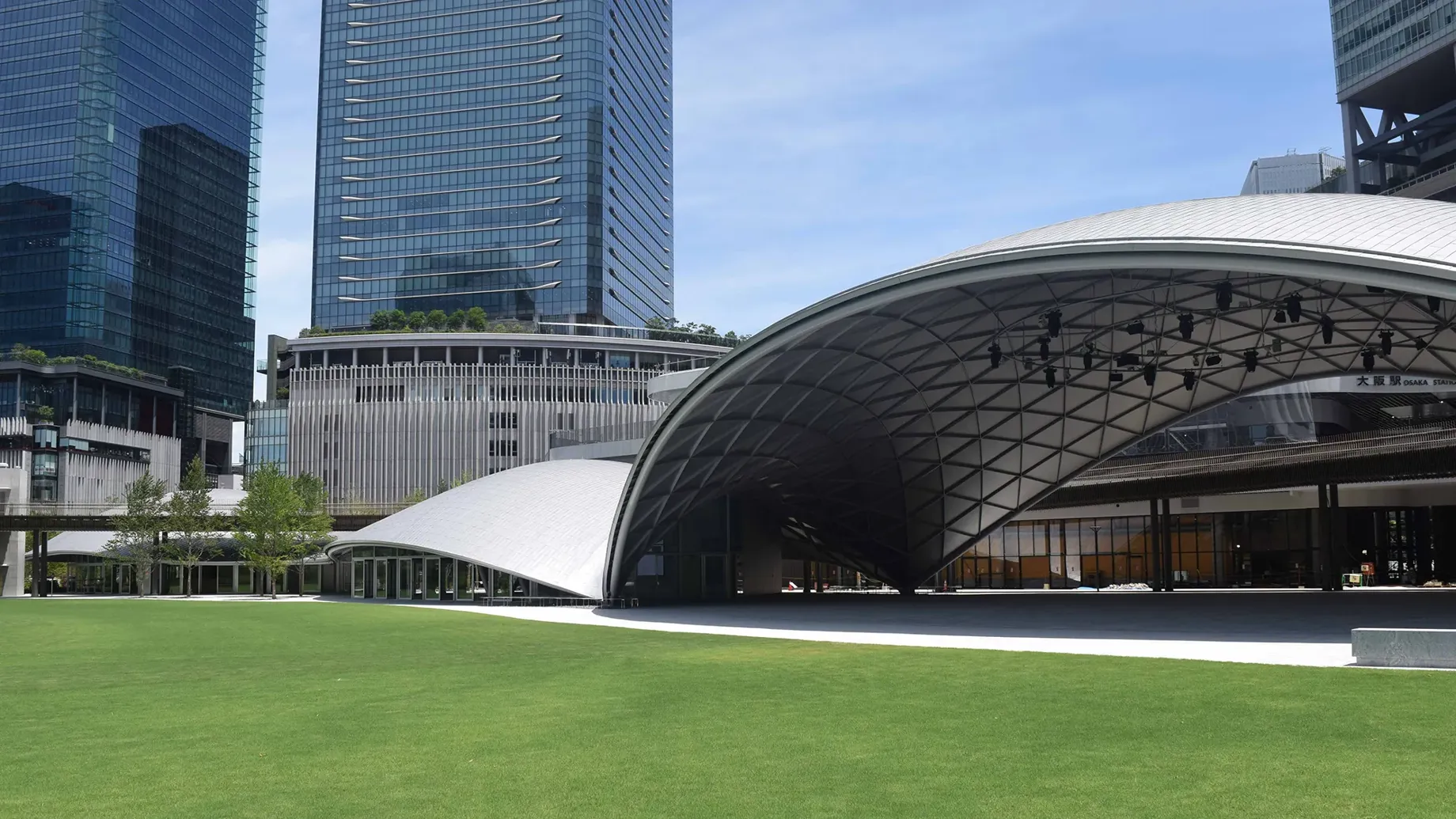
Grand Green Osaka is a major mixed‑use development integrating Umekita Park with offices, hotels, retail and residences beside Osaka Station. At its heart is the about 2,800m² Large Canopy, a roofed public facility designed by SANAA. Envisioned as a welcoming gateway to the park, the elegant, lightweight structure creates an open, accessible civic space.
Working closely with the architect, fabricator, and contractor, Arup delivered structural and advanced geometric engineering to realise a complex free-form roof, enabling a column-free public space that seamlessly integrates architecture, landscape and surrounding infrastructure.
The large roof shelters a flexible semi-outdoor plaza that can be used year-round while maintaining a strong connection to the park. By carefully placing structural supports along the edges, the design preserves open movement beneath the canopy and encourages public activity. The result is an inclusive civic space that blends nature and city, enhancing the urban experience and community life.
A free‑form roof that connects the city with nature
The facility brings together three programmes beneath a single sculptural roof: a semi-outdoor event plaza, an information centre and gallery, and a café. Each building sits independently beneath the flowing structure, allowing the architecture to follow the roof’s geometry while maintaining openness and flexibility.
Design details help dissolve the boundary between building and landscape. Sliding glass doors, perforated aluminium ceilings and durable concrete flooring allow spaces to transition seamlessly from interior rooms to sheltered eaves and into the park. The result is an accessible and welcoming environment that encourages people to move freely between city and nature.
To realise the roof’s complex form, we integrated structural engineering with advanced digital geometry. A triangular grid shell structure enables column-free spans of up to 46m, creating a generous covered plaza while preserving the roof’s light, organic character.
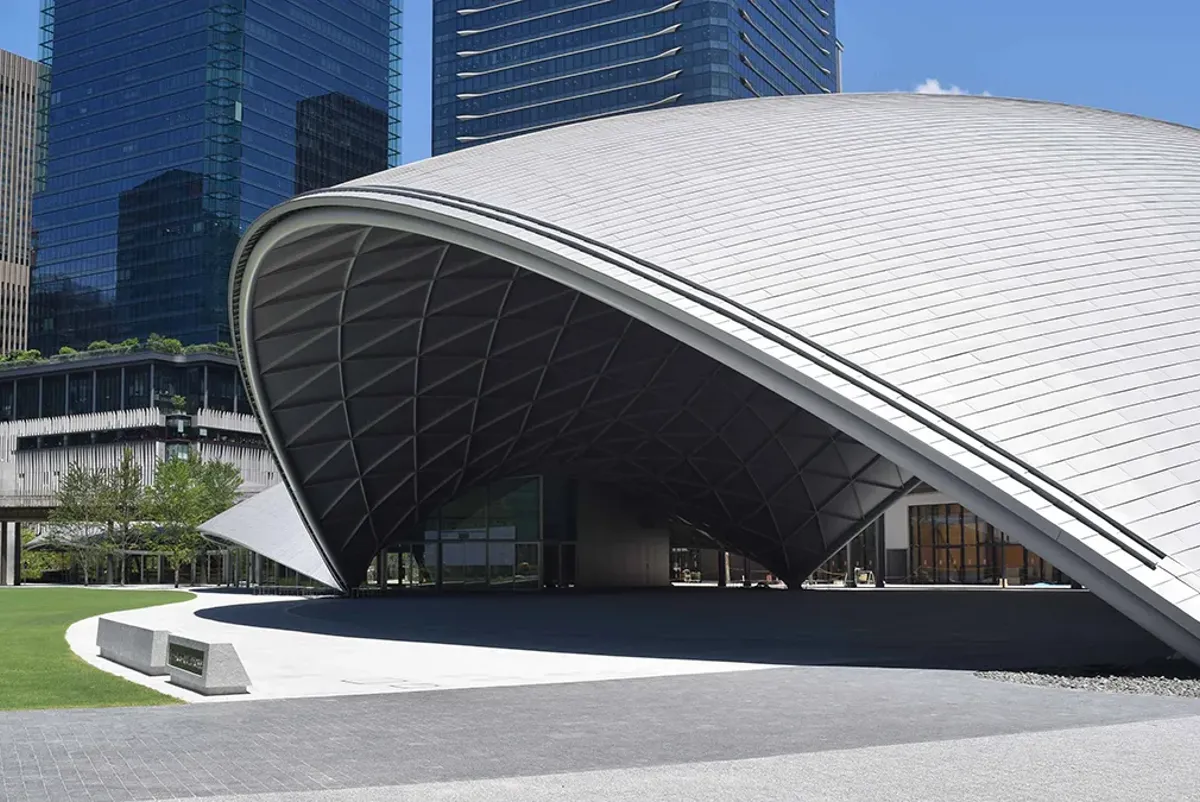
Optimised free-form arches combine lightness with high structural performance. © SANAA
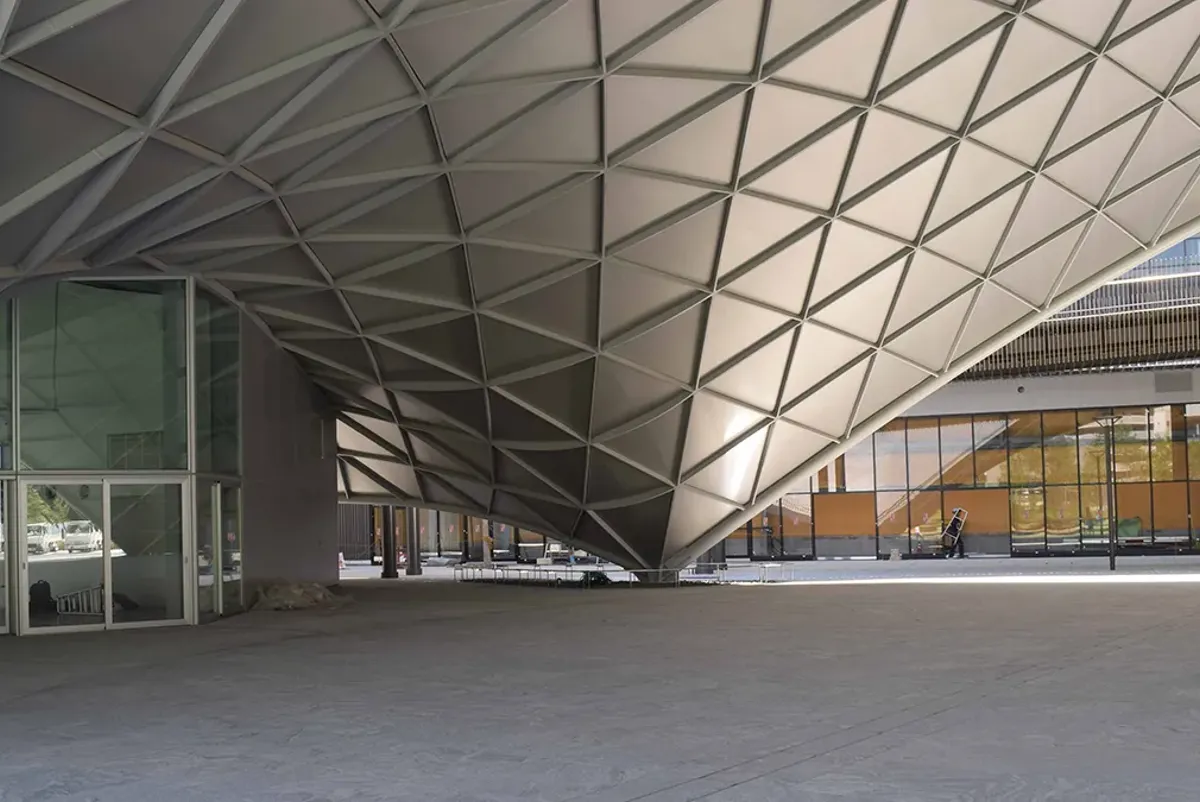
A large roof grounded at the south end, together with perimeter columns, creates an open and walkable space beneath. © SANAA
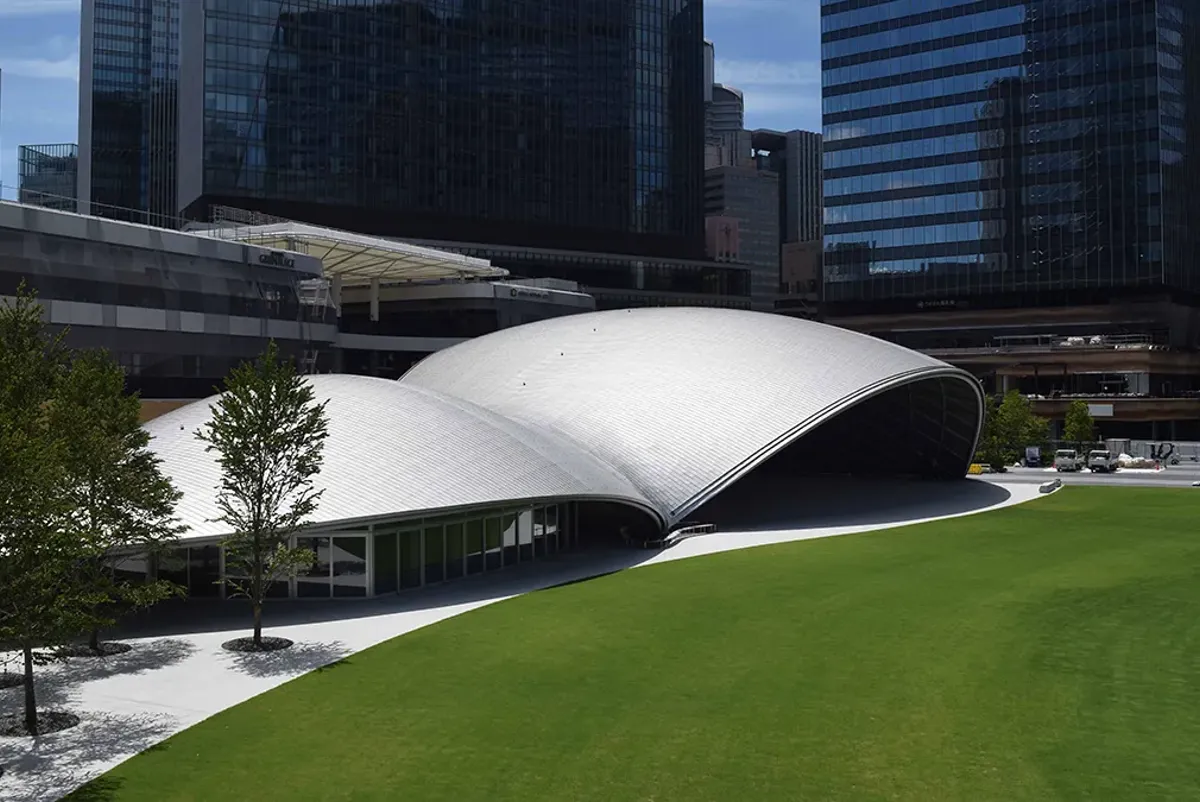
Sustainable detailing achieved without compromising architectural expression. © SANAA
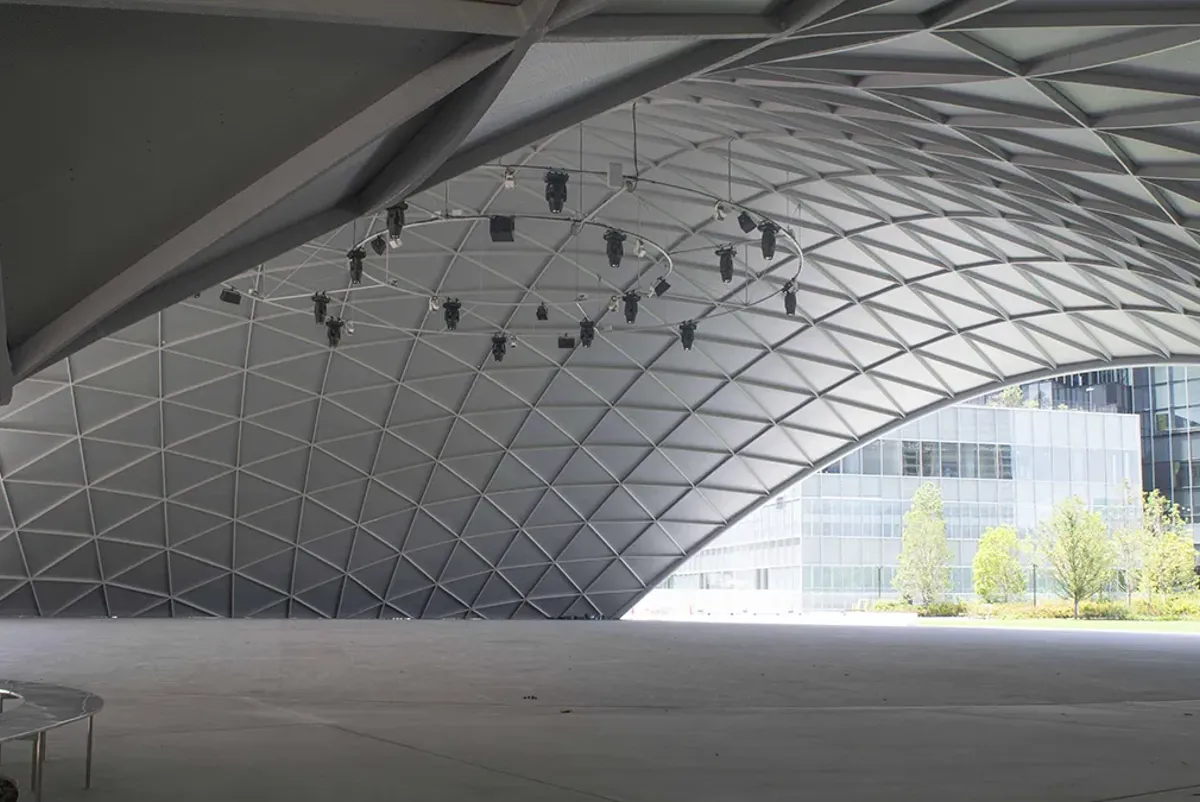
A triangular grid shell structure enables a 46 m column-free event space. © SANAA
Coordinating architecture, landscape and infrastructure
A pedestrian deck known as the ‘The Path of Inspiration’ passes above the site, linking the north and south areas of the park. Its structural columns are positioned close to the new facility, requiring careful coordination with the roof structure.
Using digital modelling and collaborative design tools, we worked with the wider team to adjust the roof geometry in three dimensions, ensuring it avoided conflicts with the deck while preserving the architectural intent. The deck spans between the information and café buildings, visually linking the two structures while maintaining open views across the park.
This coordinated approach enabled architecture, infrastructure and landscape to work together as a continuous public environment.
Precision detailing for performance and durability
The roof arches span more than 46m and are formed from 270mm-wide steel plates cut from several-tens-millimetre-thick stock, connected by 250mm-deep built-T members. Connections were carefully detailed to align with the arch geometry, ensuring structural clarity and efficient on-site assembly.To resist the significant thrust forces generated by the arches, post-tensioned cables were embedded in the reinforced concrete foundations. This solution stabilises the structure while maintaining the roof’s slender appearance.
Detailing also considered the park’s natural setting and long-term maintenance. Structural members were designed without underside flanges to discourage birds from nesting, preserving the clean architectural expression. The information and café buildings align with the roof grid, while steel bracing ensures overall structural stability.
Through close collaboration between architects, engineers and contractors, the project transforms a complex structural challenge into a generous civic space. The lightweight roof, integrated with the surrounding landscape, creates a distinctive destination where people can gather and connect with nature. The project demonstrates how engineering can enable expressive architecture while enhancing urban life. In recognition of this achievement, our senior structural engineer, Kazuma Goto, received the 20th Japan Structural Design Award for his work on Rohto Heart Square Ume-kita.
Top image © SANAA
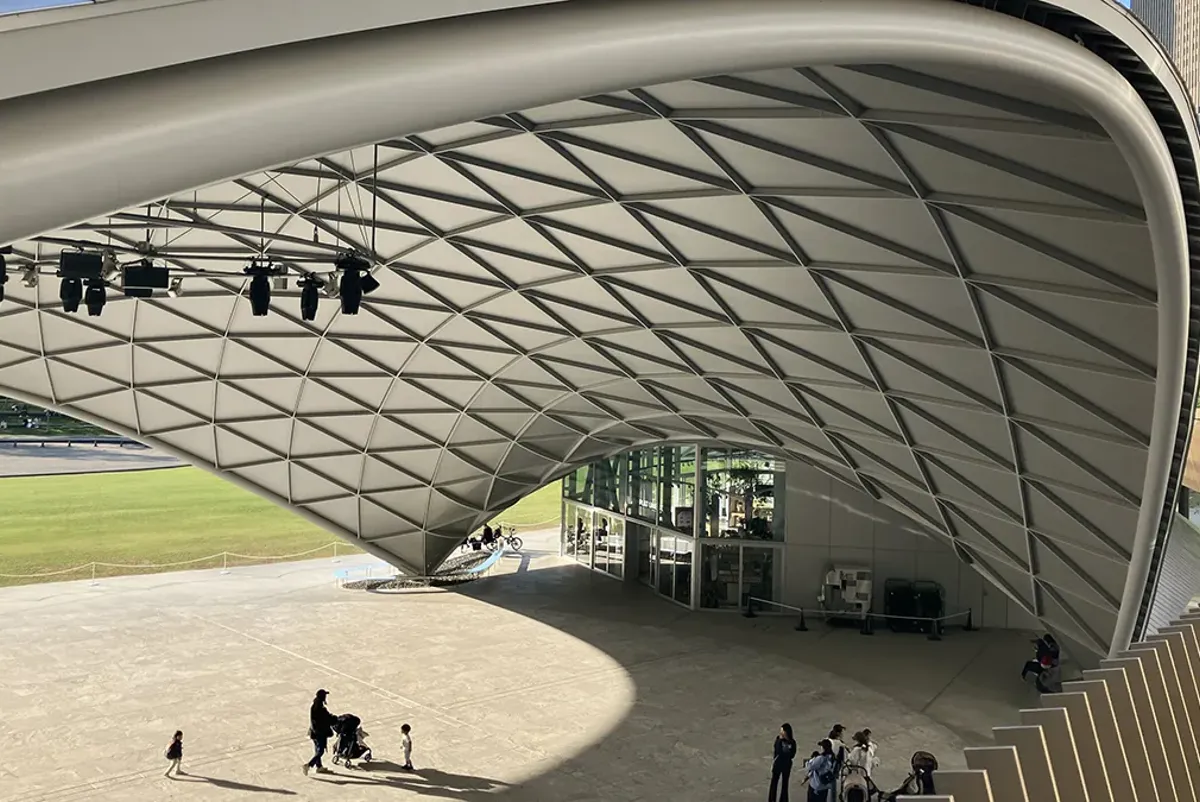
Form-finding optimised the curved surface to maximise shell action, even with a thin roof.
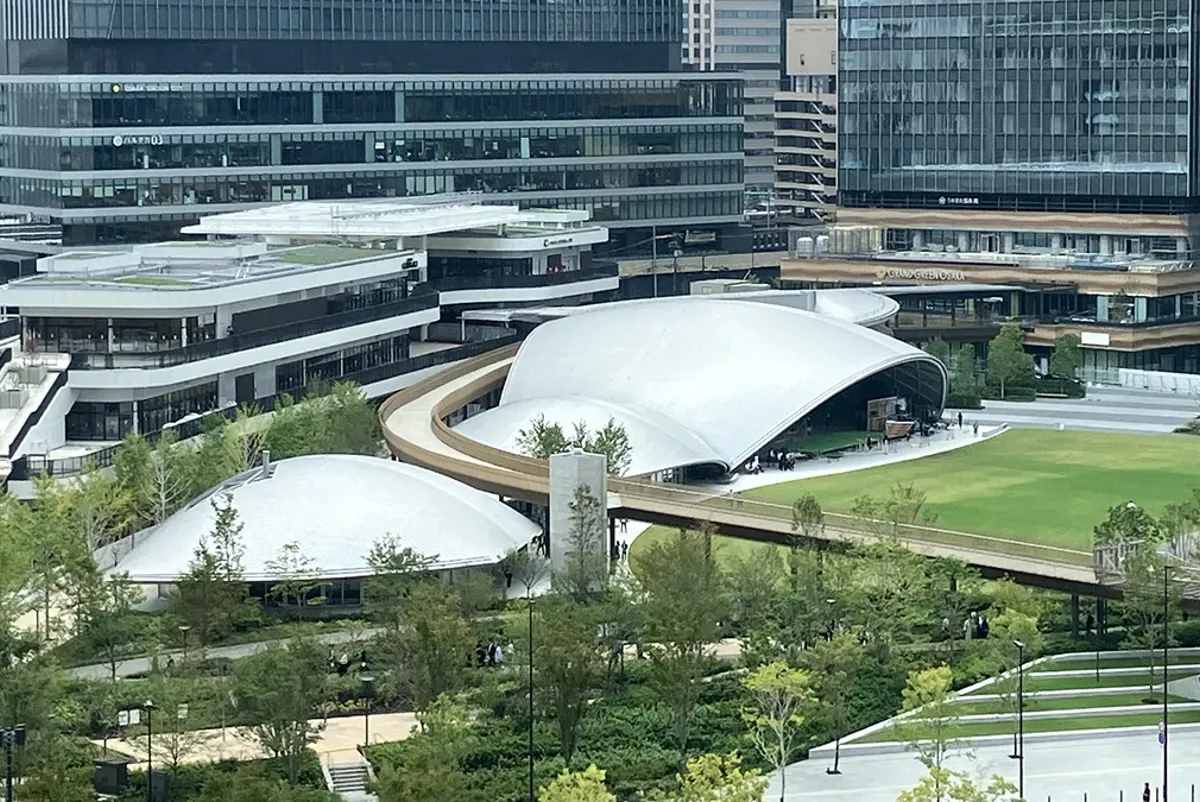
A new public space has emerged, seamlessly integrating an urban park with architecture.
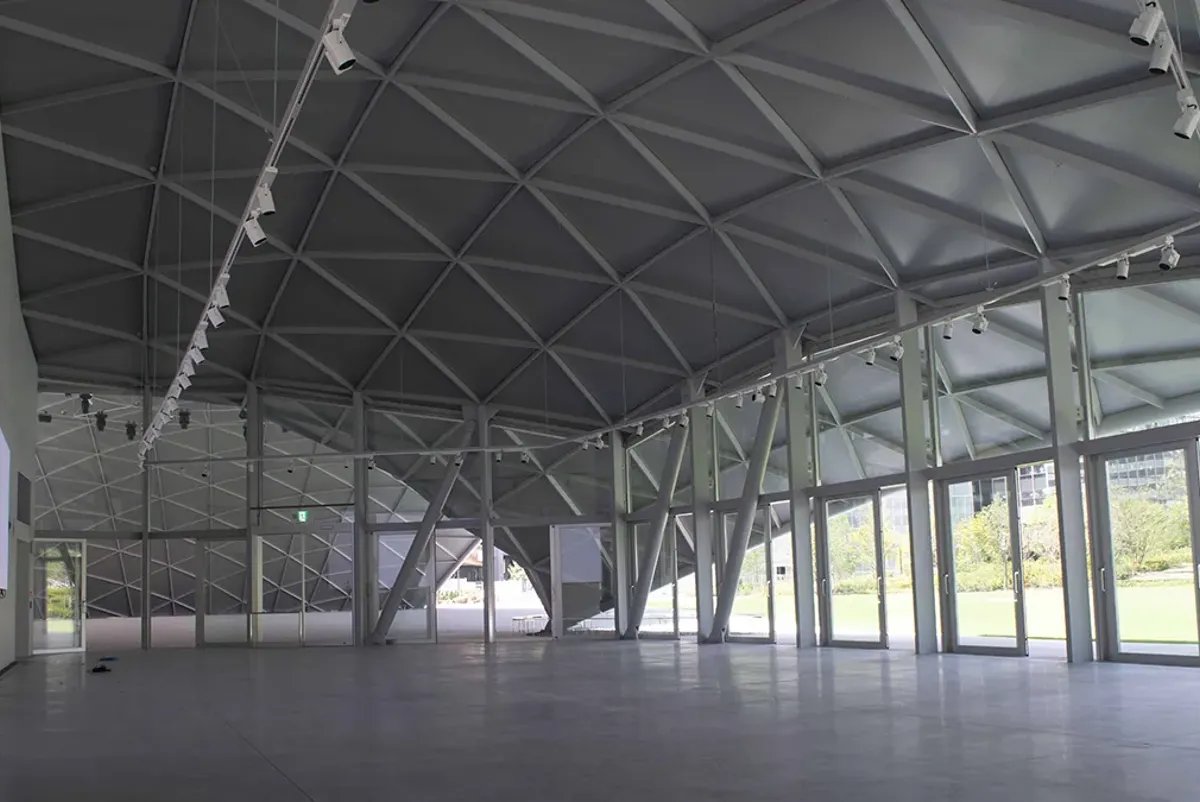
Allowing spaces to transition seamlessly from interior rooms to sheltered eaves and out into the park. © SANAA
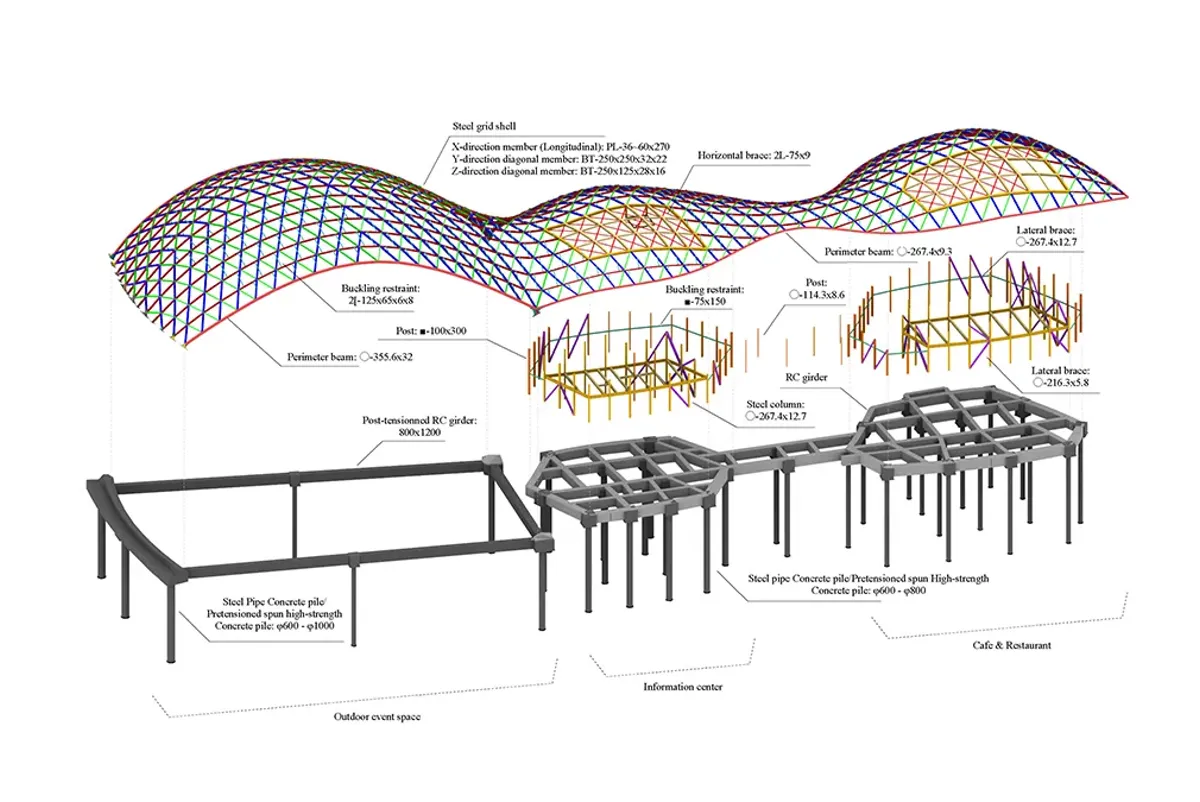
Digital tools and data enable free-form surfaces that unify design, structure, and manufacturability.
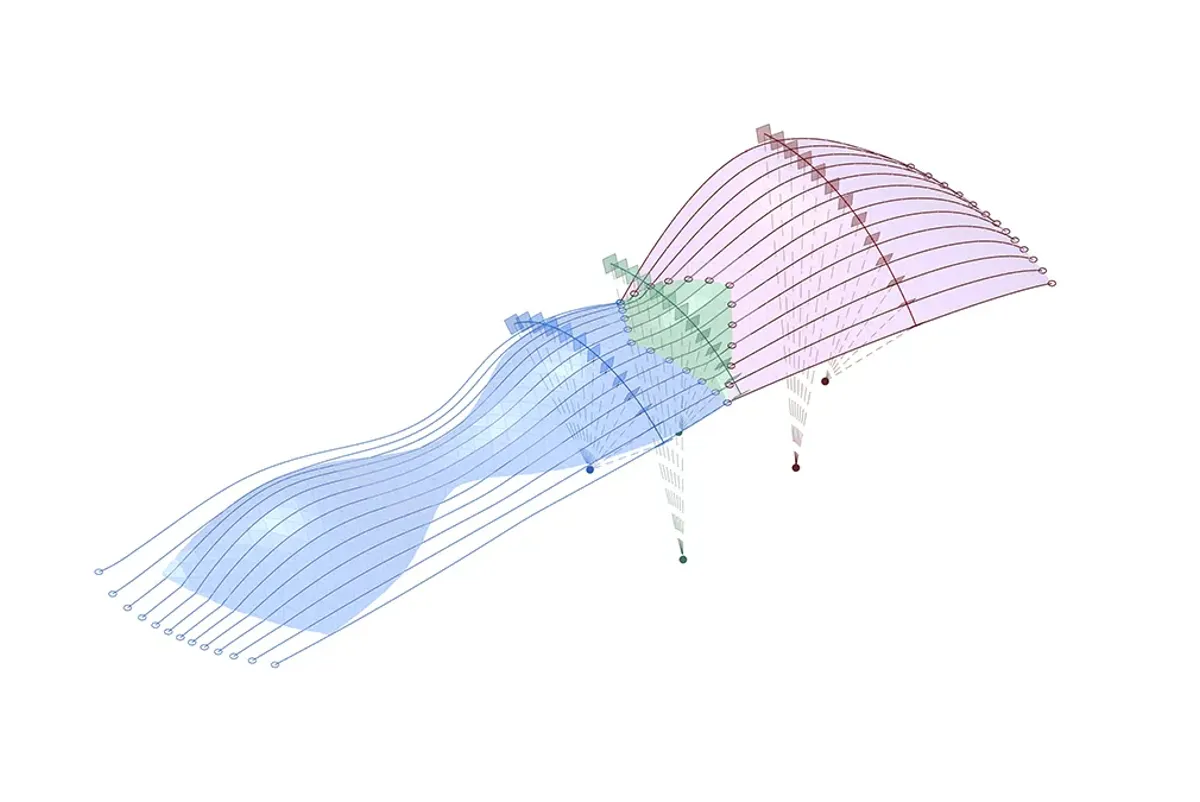
The longitudinal timber is divided into three zones, forming arches within the same span plane.
Awards
-
20th Japan Structural Design Award
Projects
Explore more structural engineering projects

Reimagining the passenger experience at the world’s busiest airfield
Chicago O’Hare Concourses D and E, USA

La Sagrada Família: a collaboration in digital and stone
Sagrada Família, Spain

Revitalizing the National Geographic Society’s headquarters with a new Museum of Exploration to showcase storytelling for explorers of the future
National Geographic Museum of Exploration, USA

Designing a transformative multi-modal gateway to Los Angeles
LAX/Metro Transit Center, USA
Get in touch with us
If you'd like to speak to one of our Architecture experts about any of the issues raised on this page or a potential collaboration then please get in touch by completing the form.
