
Delivering lighting, acoustics, AV, and theater design for the Theodore Roosevelt Presidential Library
Theodore Roosevelt Presidential Library
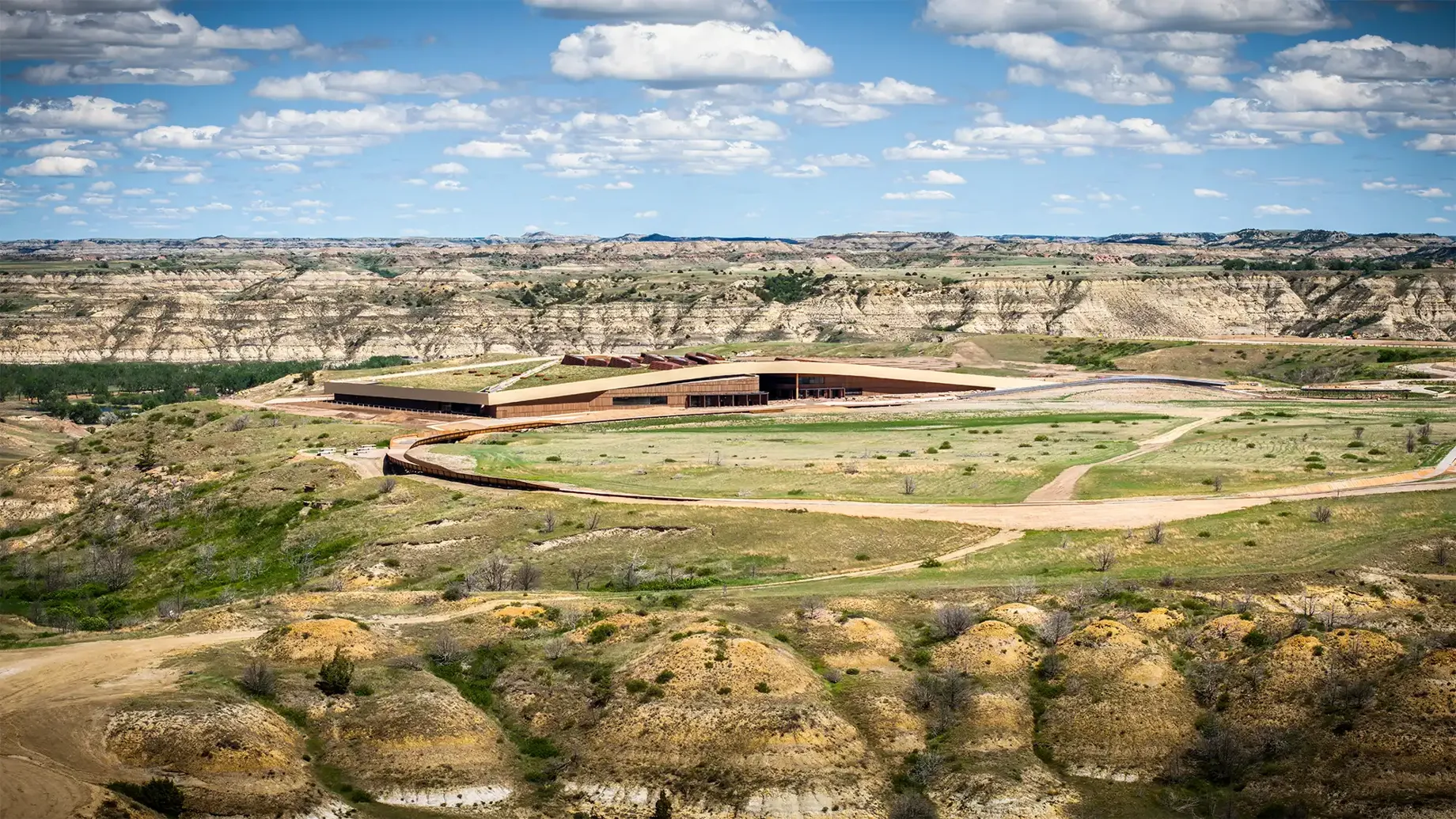
The Theodore Roosevelt Presidential Library Foundation sought to create an experience that embodies President Roosevelt’s legacy. The Library is the first comprehensive institutional home for the story of America’s twenty-sixth president. It is a 96,000-square-foot museum perched on a butte west of Medora, North Dakota, looking out across the Little Missouri River into Theodore Roosevelt National Park.
At the heart of the experience are more than 40,000 square feet of immersive exhibits, that carry visitors through Roosevelt’s life from his boyhood collections and education spaces, and gathering areas support public programming, school groups, lectures, and civic events year-round.
Winning an international competition as a part of Snøhetta’s team, Arup provided specialist engineering for the library’s lighting design, acoustics, theater systems, and audiovisual systems. With a goal to design each element thoughtfully, we focused on the longevity and sustainability of material selections in our scope.
Roosevelt died in 1919, decades before the modern presidential library system existed. For more than a century, no single institution carried his comprehensive story. The Thedore Roosevelt Presidential Library exists to do what no other institution can: bring that story together in one place, in the landscape that shaped the president’s legacy. The foundation is in pursuit of the Living Building Challenge certification, LEED Platinum, and SITES Platinum, guided by the framework of zero net energy, zero carbon, zero net water, and zero waste.
Lighting design that complements the architecture and optimizes energy use
Our team led the lighting design to balance visitor comfort with environmental stewardship, minimizing light pollution, glare, and energy use while creating welcoming environments day and night.
We performed detailed daylighting analysis to inform the size, placement, and geometry of skylights, optimizing natural light and reducing reliance on electric lighting. This approach strengthens visual connection to the landscape and complements the building’s rammed earth and mass timber architecture. At night, high-quality LED lighting subtly reveals these materials. During daylight hours, electric lighting use is reduced as skylights and perimeter glazing deliver natural light into the interior.
For the exterior, we developed a restrained strategy that supports intuitive wayfinding without uniform illumination. We customized luminaires with tailored optics and warmer color temperatures to meet sustainability goals, reduce impacts on wildlife, and preserve the night sky, in coordination with the project team and feedback from National Park stakeholders.
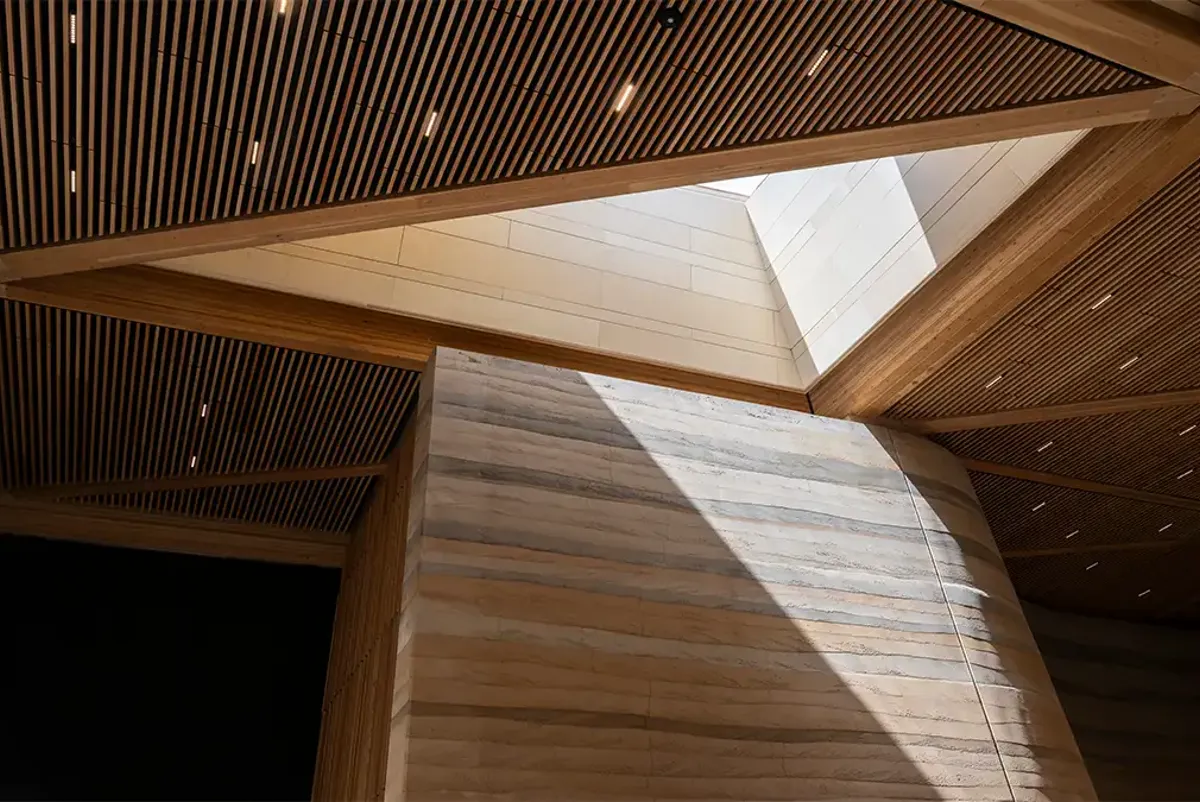
We performed detailed daylighting analysis to inform the size, placement, and geometry of skylights, optimizing natural light and reducing reliance on electric lighting. © Theodore Roosevelt Presidential Library
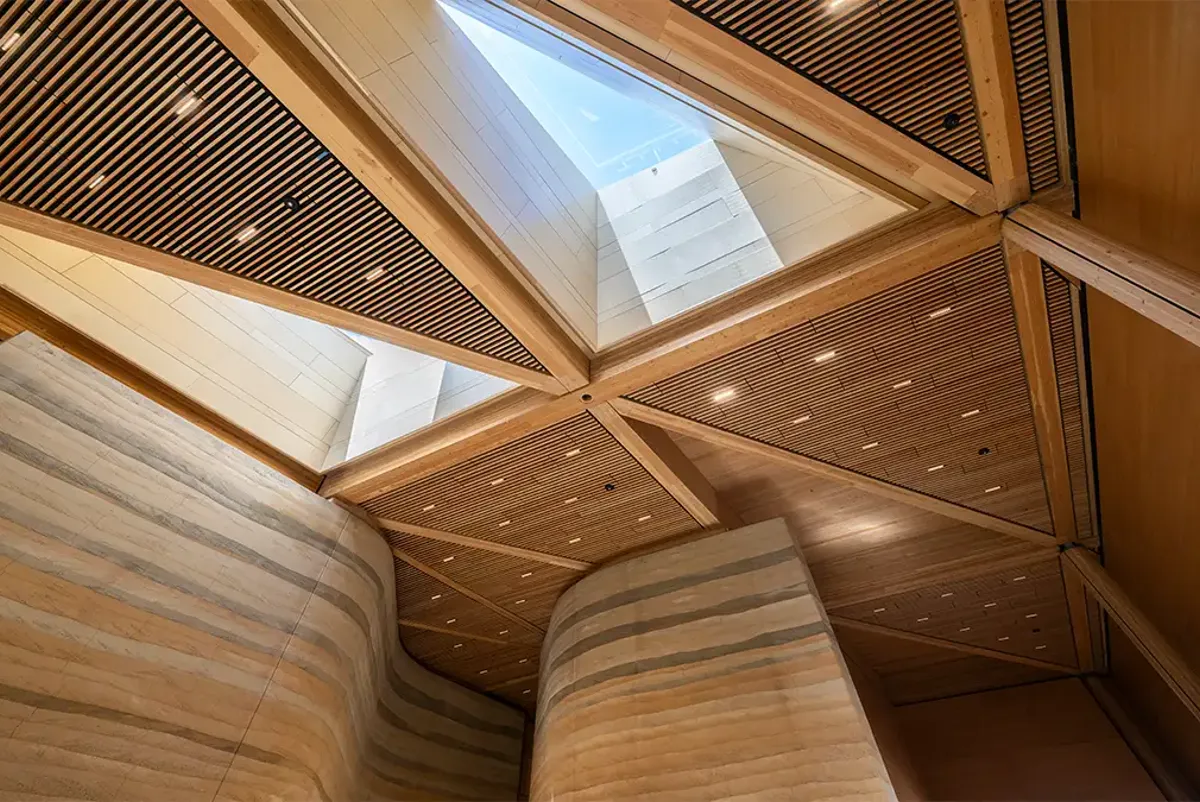
Our team led the lighting design to balance visitor comfort with environmental stewardship, minimizing light pollution, glare, and energy. © Theodore Roosevelt Presidential Library
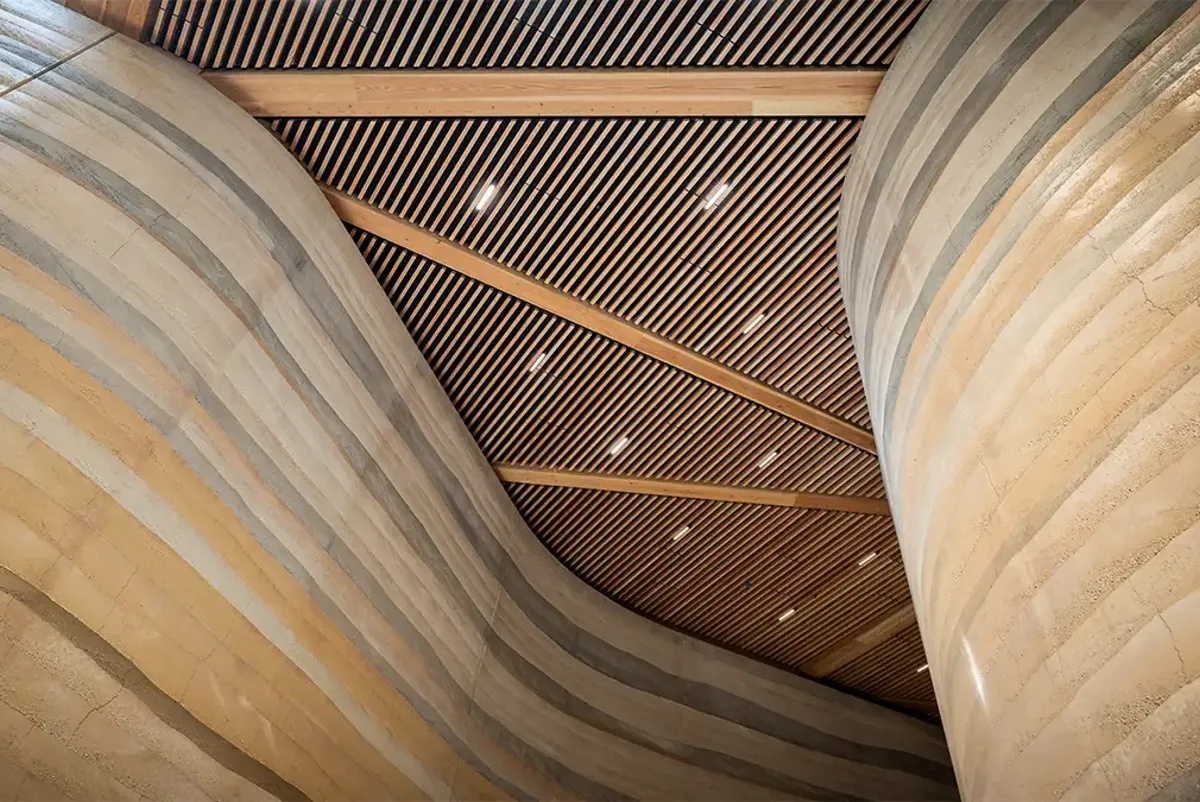
During daylight hours, electric lighting use is reduced as skylights and perimeter glazing deliver natural light into the interior. © Theodore Roosevelt Presidential Library
Acoustic and theatre design informed by place, performance, and sustainability
In our acoustic and theatre design scope, we enabled an immersive performance environment while respecting the character of the natural landscape.
The building envelope is designed to minimize noise pollution and protect the natural wildlife of the surrounding National Park, while also preventing nearby trains and outdoor events from disrupting performances. Inside the building, we incorporated sound absorbing finishes made from sustainable materials that visually complement the mass timber structure, creating architecturally integrated and discrete acoustic treatments. The auditorium itself was shaped to enhance speech intelligibility and support the wide range of event types planned for the Library’s new performance space.
To meet the goals of the Living Building Challenge, we incorporated sustainable theatre products, including recycled fabric for the blackout curtains and custom seating manufactured in the United States. The auditorium offers sweeping views of the surrounding grasslands, reinforcing the building’s biophilic qualities and providing a natural backdrop for lectures and performances, with a blackout curtain available to support high‑quality lighting and audiovisual production. We designed a barrier‑free experience for audiences, performers, and technicians, providing accessible seating, clear circulation throughout the theatre and back‑of‑house areas, and an assistive listening system.
Shaping the exhibit experience through lighting and acoustics
We collaborated with exhibit designer Local Projects to deliver a flexible lighting system supporting a wide range of immersive environments, from static, scenographic installations to highly dynamic, media-driven spaces. Wireless controls and interchangeable components allow a kit-of-parts system to adapt to changing content, carefully balancing light, color, and intensity to shape each experience.
Within the narrative galleries, we developed a luminous ceiling system that filters daylight from skylights above, which extend through the walkable green roof. This daylighting strategy reduces reliance on electric lighting while bringing controlled natural light into the central exhibit spine, reinforcing a connection to the surrounding landscape.
We advised on acoustic strategies for the exhibit spaces, recommending material treatments to control sound transfer and improve clarity. These interventions support immersive, media-rich environments while maintaining visitor comfort across varied conditions.
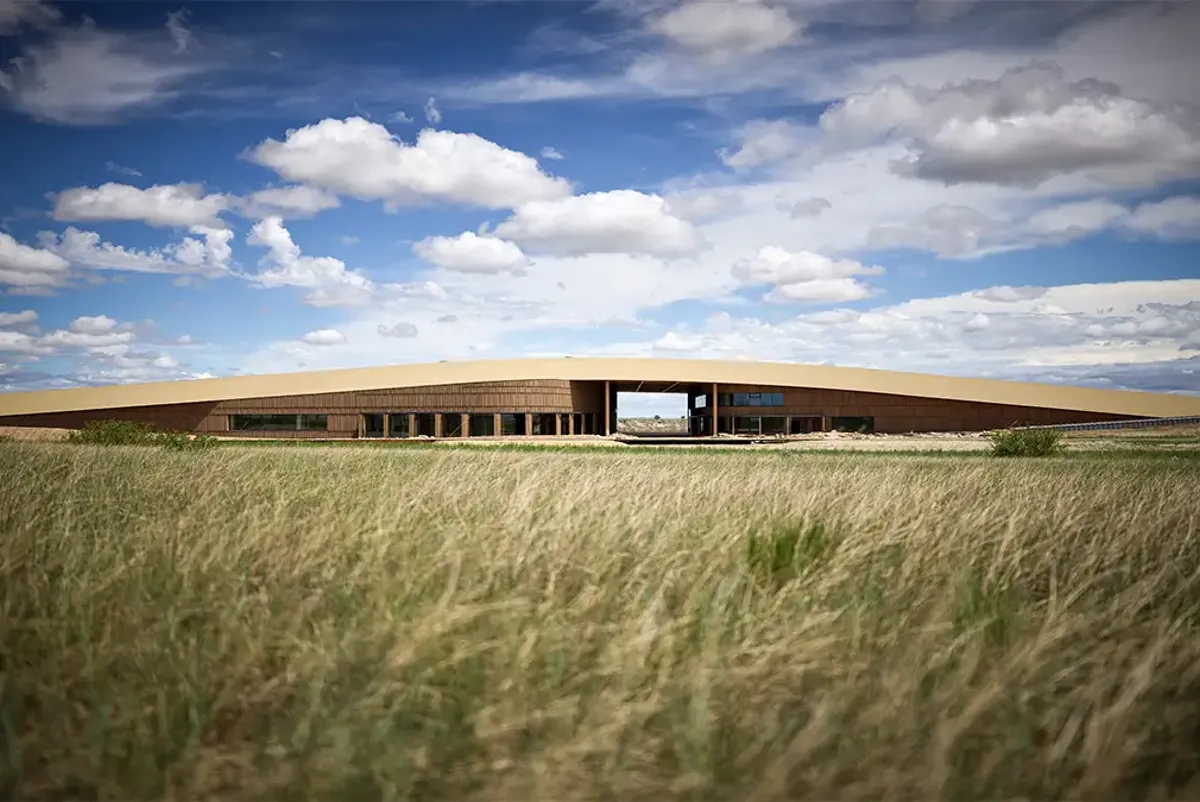
With a goal to design each element thoughtfully, we focused on the longevity and sustainability of material selections in our scope. © Theodore Roosevelt Presidential Library
JLG Architects
Projects
Explore more arts and culture projects

La Sagrada Família: a collaboration in digital and stone
Sagrada Família, Spain

Revitalizing the National Geographic Society’s headquarters with a new Museum of Exploration to showcase storytelling for explorers of the future
National Geographic Museum of Exploration, USA

A net-positive botanical garden built for research and resilience
Marie Selby Botanical Gardens, USA

Expanding a New York cultural landmark dedicated to contemporary art
The New Museum of Contemporary Art Expansion, USA
Get in touch with us
If you'd like to speak to one of our arts and culture experts then please get in touch by completing the form.
